
Here is everything you need to know to visit the Lower Belvedere Palace, one of Vienna’s most stunning Baroque complexes. Discover its historic rooms and the current temporary exhibitions.
Support when you need it
Customer support to help you with everything you need from 8.00 a.m. to 6.00 p.m.

Fast and online booking
Choose the best option for your needs and preferences and avoid the lines booking here

#2 Attractions in Vienna
Explore Belvedere Palace in Vienna: Baroque beauty, lush gardens, and Klimt's iconic art.

The Lower Belvedere Palace is part of one of the most spectacular summer residences ever built. It was commissioned by Prince Eugene of Savoy, a brilliant military commander and one of the greatest statesmen of early modern Europe.
Born in Paris, he was rejected by the French army and therefore pursued his career in Austria, where he distinguished himself through his military talent and discipline. He played a key role in the wars against the Ottoman Empire, achieving major victories such as Zenta and the capture of Belgrade, and also took part decisively in the War of the Spanish Succession against France. Beyond his military career, he was an influential politician and a patron of the arts, helping to strengthen the power and prestige of the Austrian Empire.
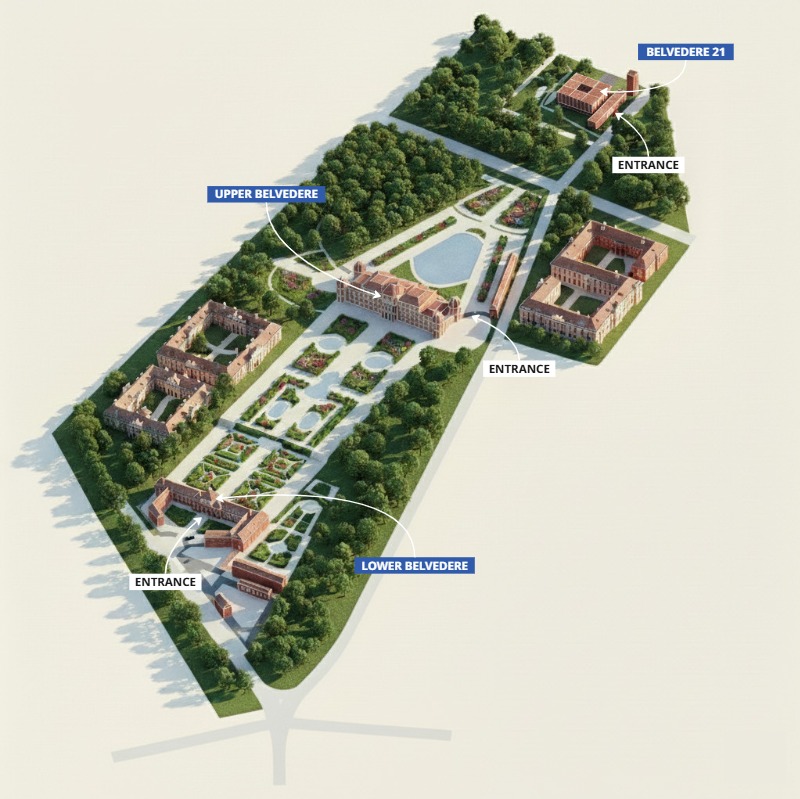
Unlike the Upper Belvedere, which had a more ceremonial and representational function, this building was conceived as his private residence, the place where he actually lived and received his closest guests.
To understand why this palace is so important, we need to talk a bit about the Habsburgs. This dynasty was one of the most influential royal houses in Europe, ruling for centuries over an empire that had Vienna as its cultural and political heart.
Although Prince Eugene was not a Habsburg himself, his loyalty to the crown and his military victories were key to the empire’s stability, allowing him to build this museum we enjoy today. The Habsburgs eventually acquired the complex years after his death, turning it into a space to house the imperial art collection, a tradition that continues to this day.
Nowadays, the Lower Belvedere has transformed its residential quarters into world-class exhibition halls. While the upper building focuses on the permanent collection, this space is mainly dedicated to temporary exhibitions exploring different periods of Austrian and international art. It is a place where original Baroque design coexists with modern proposals, offering a much more intimate and detailed experience than the grand halls of the upper building.
Regarding its location, it is found in the third district of Vienna, Austria, right at the lower end of the terraced gardens that connect both structures. It is situated very close to the historic center, making it easily accessible on foot or by public transport. Don’t worry about the logistical details right now; in the following lines, we will explain how to reach this “must-see” stop if you want to understand how the aristocracy of the time lived in an environment of great opulence.
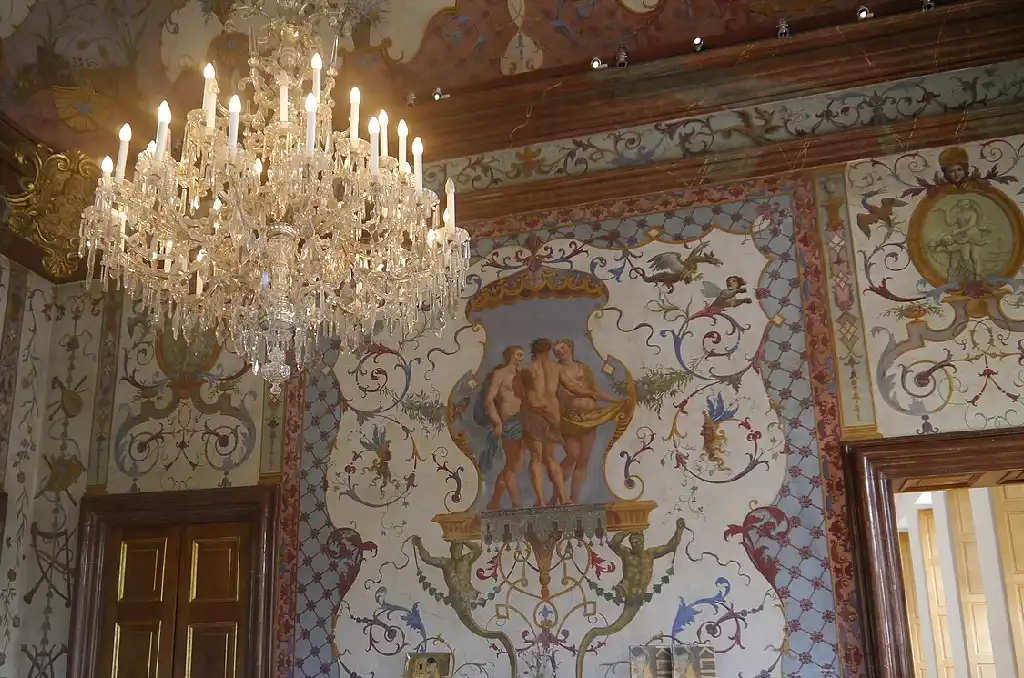
Upon entering the Interior of the Lower Belvedere, you will discover rooms that preserve much of their original decoration. These are the essentials:


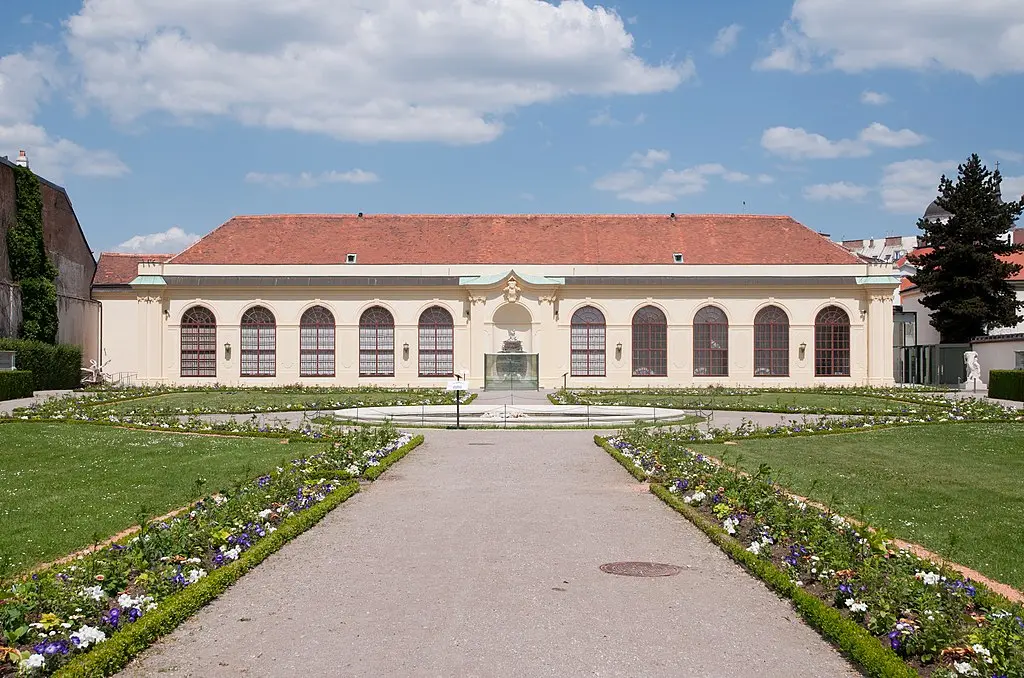
It’s very common when planning your visit to wonder if it’s worth entering both or if one is enough. The main difference between the Lower and Upper Belvedere lies in what you will find inside these complexes.
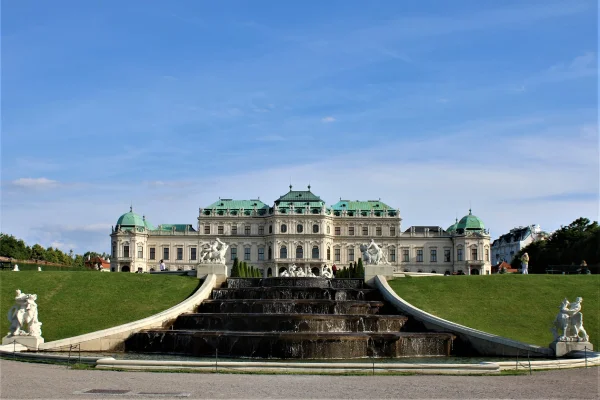
The Upper Belvedere is the most well-known face of the complex, primarily because it houses the permanent collection of Medieval and Baroque art, and of course, works by Gustav Klimt like “The Kiss.” If you are looking for the great icons of Austrian art, this is your place! But be prepared to share the space with many more visitors.
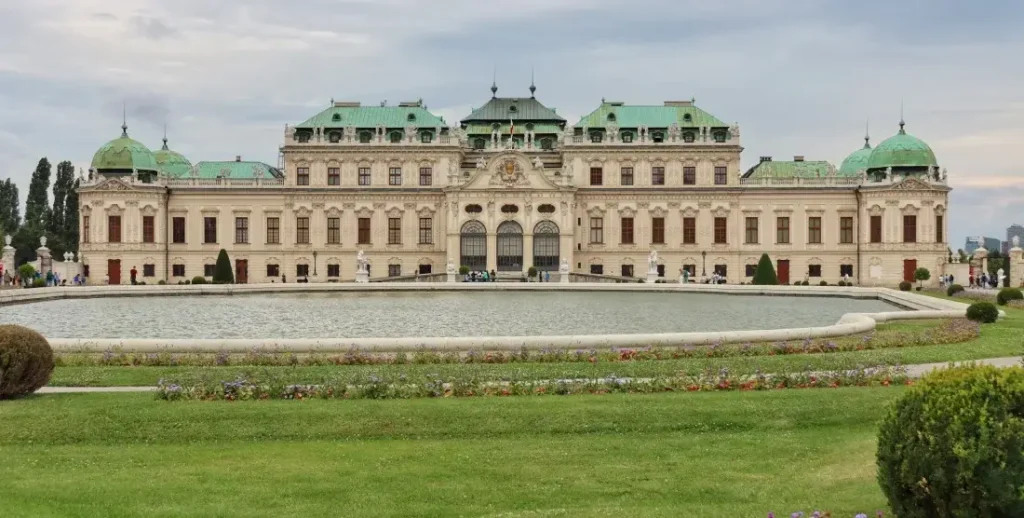
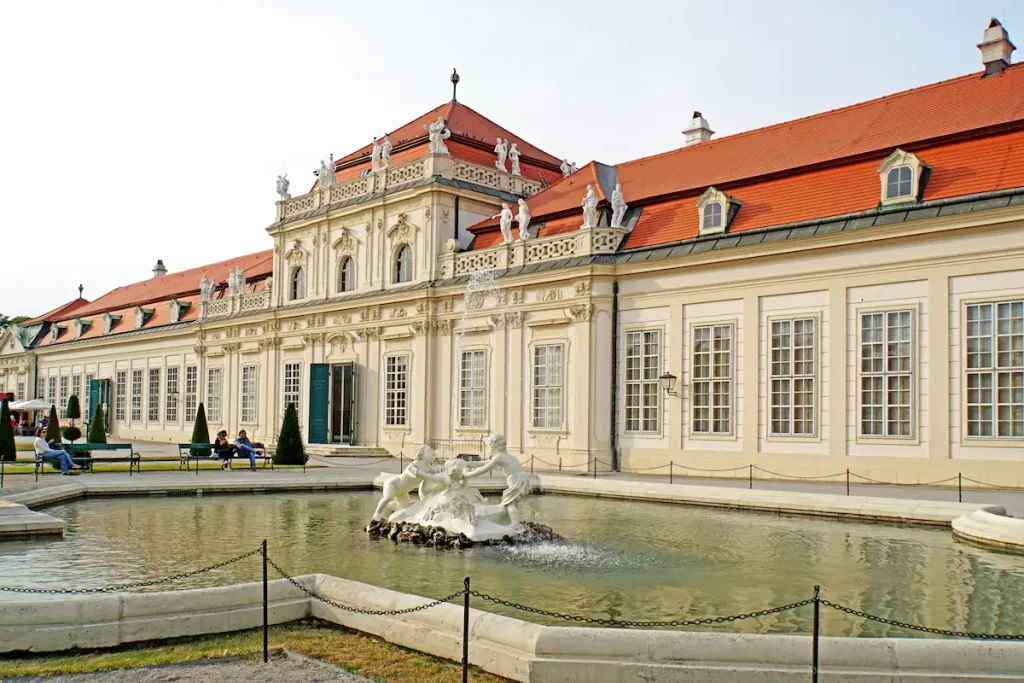
Conversely, the Lower Belvedere offers a much calmer experience focused on the history of the building itself. Here you can walk through the royal bedrooms and the prince’s leisure rooms, feeling like you are in a home (a very luxurious one, mind you) and not just a gallery. While the upper palace is imposing and monumental, the lower one is detailed and decorative. The architecture of the Lower Belvedere is more sprawling, subtly integrating with the surrounding neighborhood.
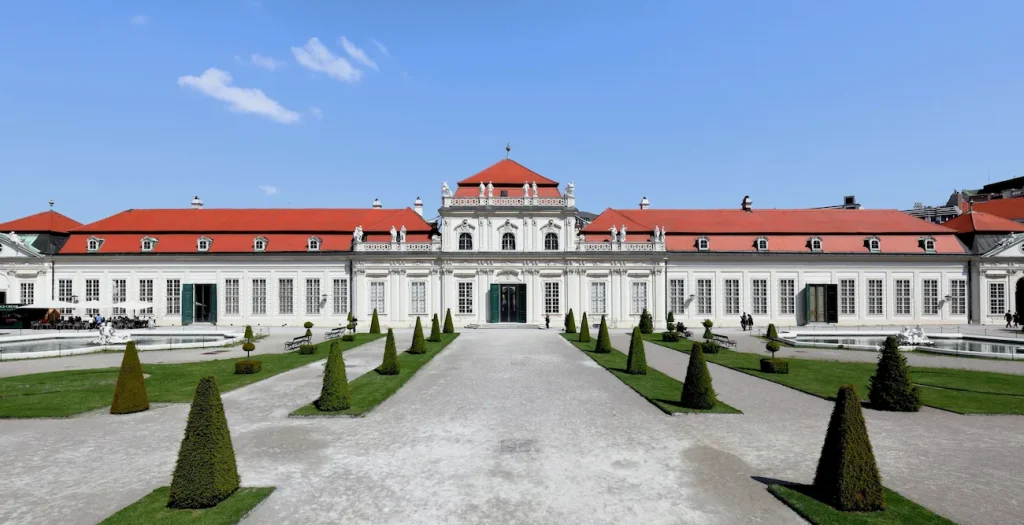
Another fundamental difference is the type of art: in the lower building, exhibitions change every few months, meaning there is always something new to see, even for those who have visited the city before. It is a space of constant discovery!
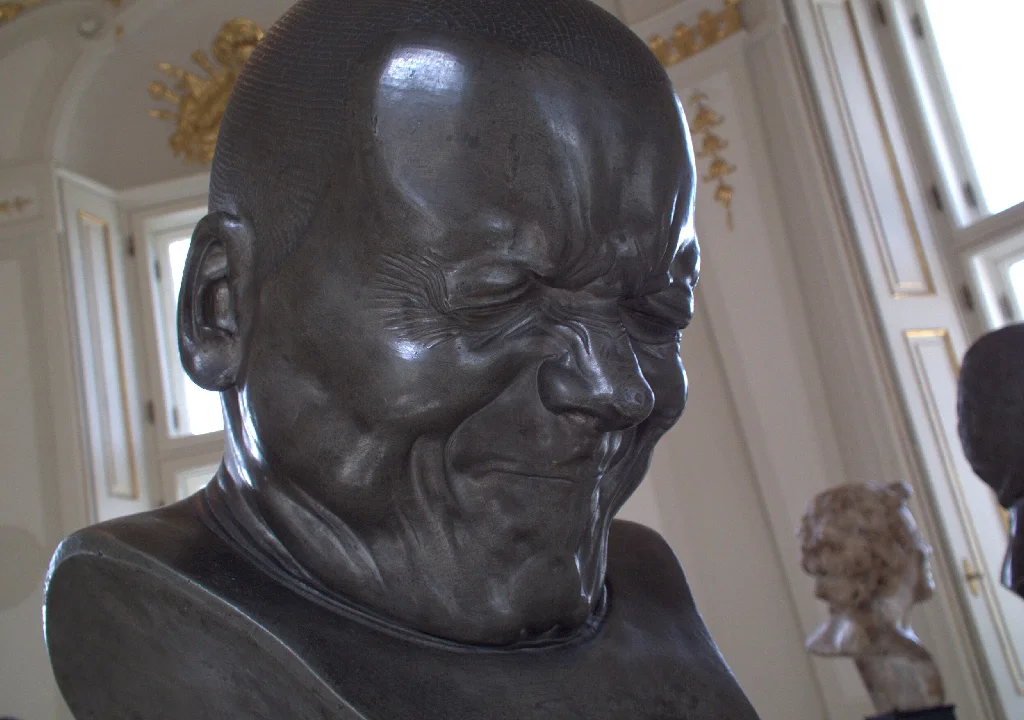
If you’re looking for something striking and out of the ordinary, this exhibition is not to be missed. Messerschmidt is renowned for his “character heads,” sculptures featuring extreme, almost surreal facial expressions for their time. The exhibition explores his technique and the psychology behind his work.
His famous sculptures are part of the Belvedere collection and are usually displayed in the Upper Belvedere, where they are presented within the context of 18th-century art. However, the museum occasionally relocates these works to the Lower Belvedere for temporary or thematic exhibitions. For this reason, until April 6, 2026, you can see some of Messerschmidt’s works at this location.
Photo: “Franz Xaver Messerschmidt – Charakterkopf” by DALIBRI.
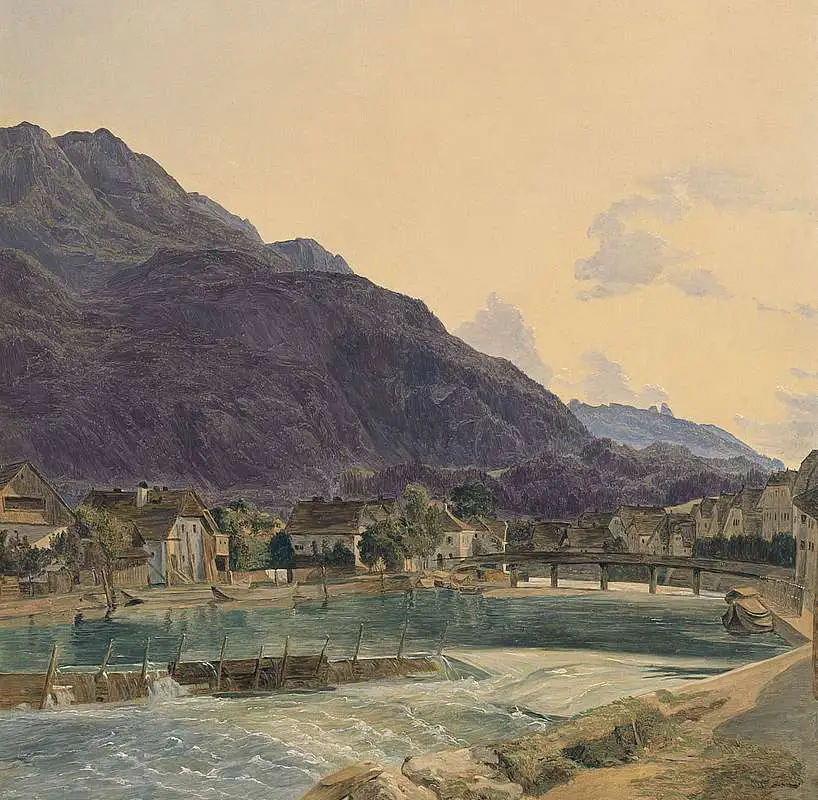
In the exhibition “Ferdinand Georg Waldmüller: True to Nature” at the Belvedere, you will discover the 19th-century heyday of European landscape painting. You can admire Waldmüller’s mastery as he captures the natural world through intimate tree portraits and sweeping views of the Salzkammergut.
As you explore his work alongside masterpieces by John Constable and Corot, you will see how Waldmüller fits into the wider European artistic movement. You have until 14 June 2026 to experience this collaboration with the National Gallery, London.
The opinion of other travelers always comes in handy when deciding how to spend your time in a city with so much cultural variety. It’s true that many visitors with limited time tend to prioritize the upper part of the palace. For example, on Facebook you can see comments like “I would say if you only see one, see the upper Belvedere” or more direct statements like “Upper is better!!.” This preference is usually based on the fact that the upper building is larger and houses the most famous paintings, satisfying the needs of tourists looking for the essentials.
However, if you stick only to that view, you might miss out on unique experiences. Other users often add interesting nuance to these opinions: “I agree that normally Upper is enough, but check website to see what’s on at Lower. When we went there was a special exhibit on Klimt at the Lower that I would have been very sorry to miss so glad I got both.” This is the key to the Lower Belvedere! As the seat of temporary exhibitions, it often hosts international works or deep dives into specific artists that you won’t see anywhere else.
Our recommendation is that if you love art, the Lower Belvedere is the perfect complement. It allows you to step away from the crowds and enjoy a top-tier building in rooms that, on their own, justify the ticket price. Truth be told, strolling through the Golden Cabinet without the rush found in front of “The Kiss” is a pleasure I highly recommend experiencing.
Yes, you need a specific ticket. While there are combined tickets that allow you to visit both palaces, which are usually better value if you plan to see the whole complex, you can buy an individual ticket just for the Lower Belvedere if you are only interested in the temporary exhibitions happening there at that moment.
To enjoy it without rushing, my recommendation is to set aside at least an hour and a half. This will give you enough time to tour the historic rooms, such as the Marble Hall, and take your time with the active temporary exhibition.
Gustav Klimt’s “The Kiss” is permanently located in the Upper Belvedere. While the Lower Belvedere often hosts very interesting temporary exhibitions about Klimt or his contemporaries, the artist’s most famous work is always on display in the building at the top of the hill.
No, no one resides there today. Although it was originally the home of Prince Eugene of Savoy and was later used by members of the Habsburg imperial family, today the entire building functions exclusively as a public museum and office space for the gallery’s administration.
There is no formal dress code, so you can wear comfortable walking clothes. The only thing to keep in mind is that large backpacks or umbrellas are not allowed inside, but the palace has a free cloakroom service where you can safely leave your belongings.
Yes, the palace is fully adapted. Despite being a historic building, it has ramps and elevators that allow access to all exhibition rooms. Additionally, the museum staff is usually very helpful and will assist you in finding the most comfortable routes through the galleries.
Of course! The Baroque gardens connecting the two palaces are free for everyone to access during opening hours. It’s a fantastic place to walk, enjoy the fountains, and take photos of the facades without needing to buy a ticket, although the full experience definitely includes the interior.