Belvedere Palace information
Explore the rich history and stunning architecture of Belvedere Palace in Vienna. Learn about its Baroque design, the architect behind it, and its cultural significance.
Support when you need it
Customer support to help you with everything you need from 8:00 to 18:00.
Fast and online booking
Select your ticket for your needs and preferences and avoid the lines booking here.
Top attraction in Vienna
Explore Belvedere Palace in Vienna: Baroque beauty, lush gardens, and Klimt's iconic art.
Belvedere Palace complex
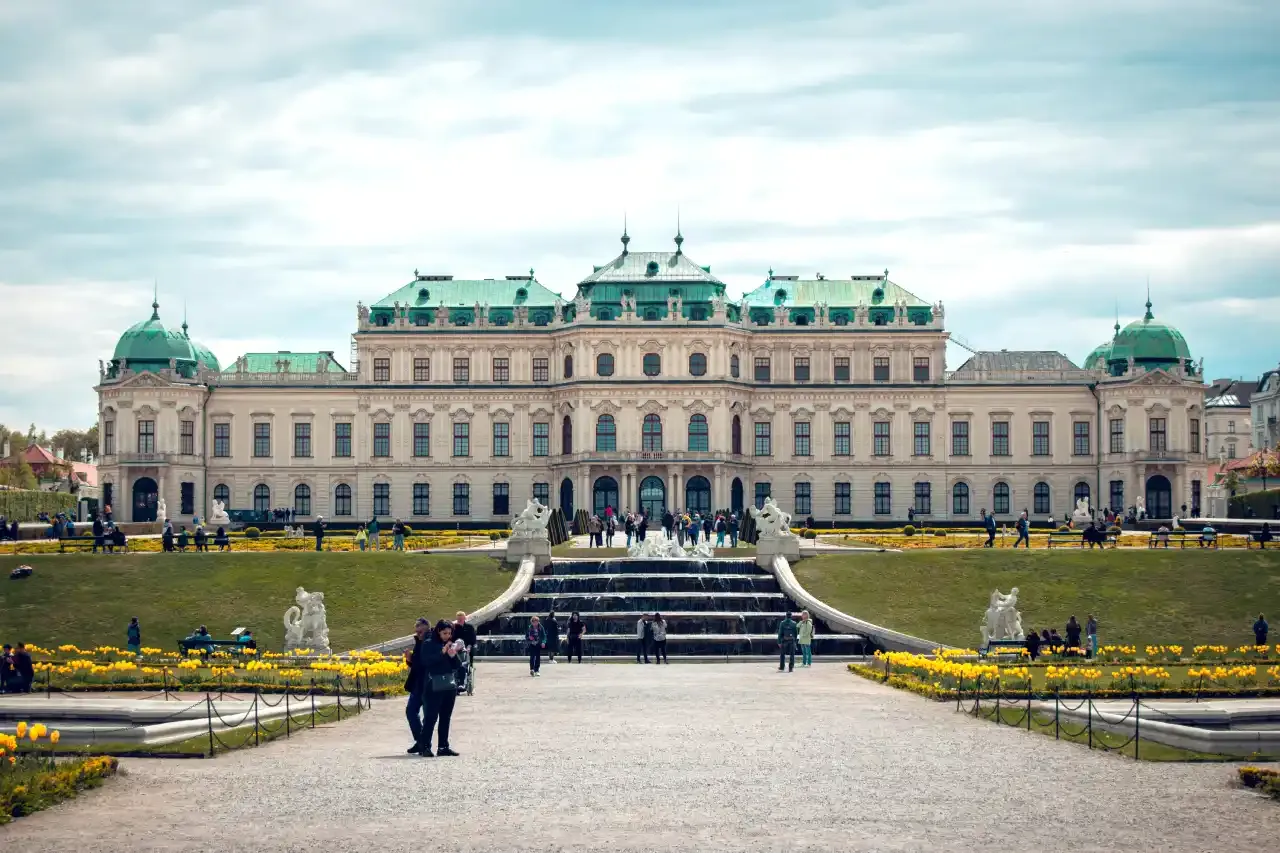
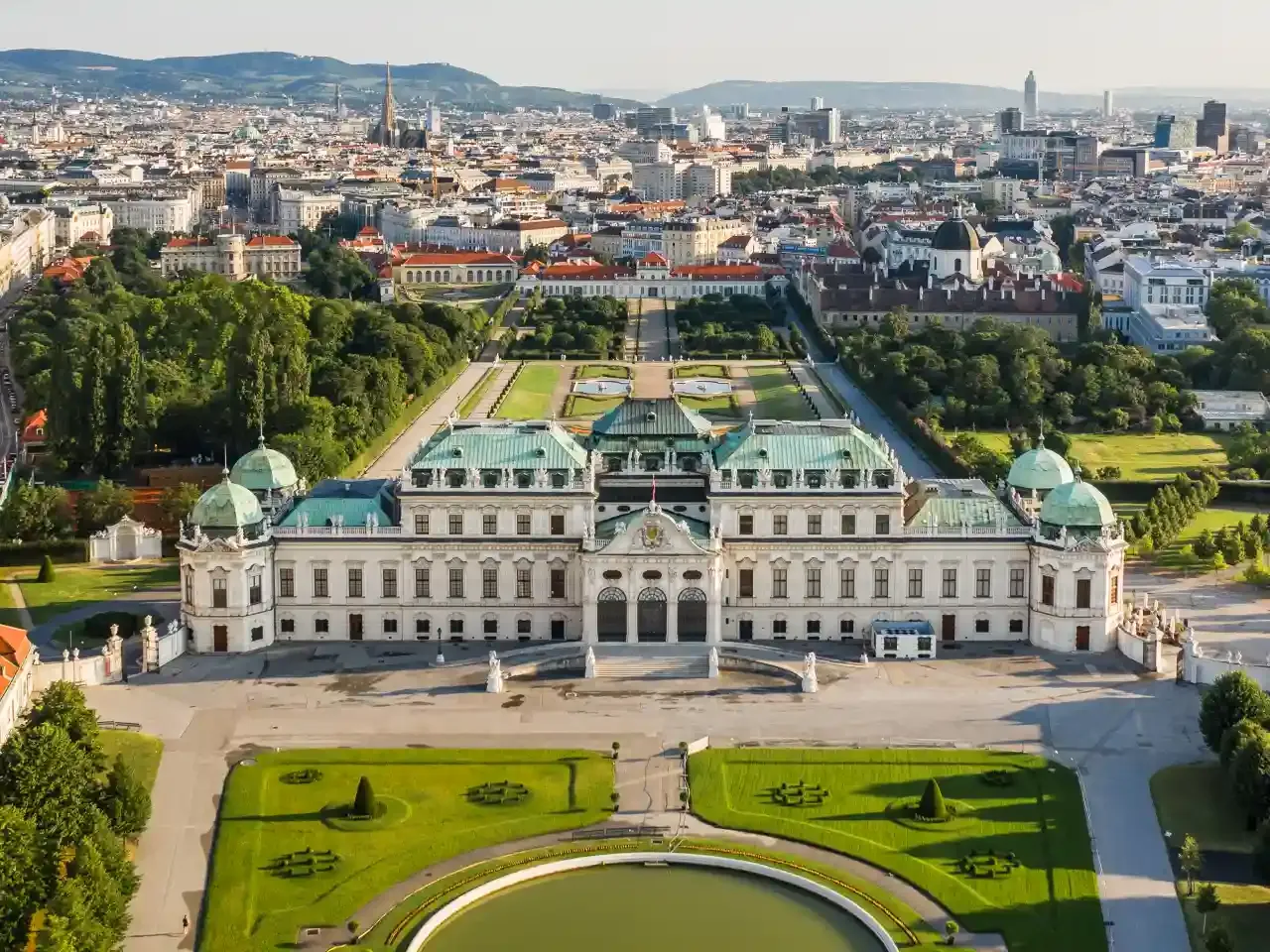
The Belvedere Palace complex is more than just two palaces; it is a cultural treasure trove that offers a comprehensive look into Vienna’s artistic and historical evolution. The complex includes the Upper and Lower Belvedere, the Orangery, and the Palace Stables, each with its unique exhibitions and architectural features.
The gardens connecting the palaces are a highlight, providing a picturesque backdrop for visitors to explore. With its rich history, stunning architecture, and world-class art collections, the Belvedere Palace complex is a must-visit destination in Vienna, offering something for everyone to enjoy.
The location is easily accessible by public transportation, making it convenient for tourists staying in different parts of the city. Visitors can reach the palace by taking the tram (D line) to the Schloss Belvedere stop or the S-Bahn to the Quartier Belvedere station. Additionally, several bus lines serve the area, and there is ample parking for those arriving by car.
Photography is generally permitted, but flash and tripods are not allowed. It’s best to check for any specific restrictions in certain exhibitions or areas. Guided tours are also available in multiple languages, including English, to accommodate international visitors.
Belvedere Palace history
Belvedere Palace is a masterpiece of Baroque architecture, designed by the renowned architect Johann Lucas von Hildebrandt in the early 18th century. The complex was originally intended as a summer residence for Prince Eugene of Savoy, a military leader and art patron.
The Upper Belvedere Place was designed by the architect Johann Lukas von Hildebrandt, it was completed in 1723 and served as a summer residence for Prince Eugene of Savoy.
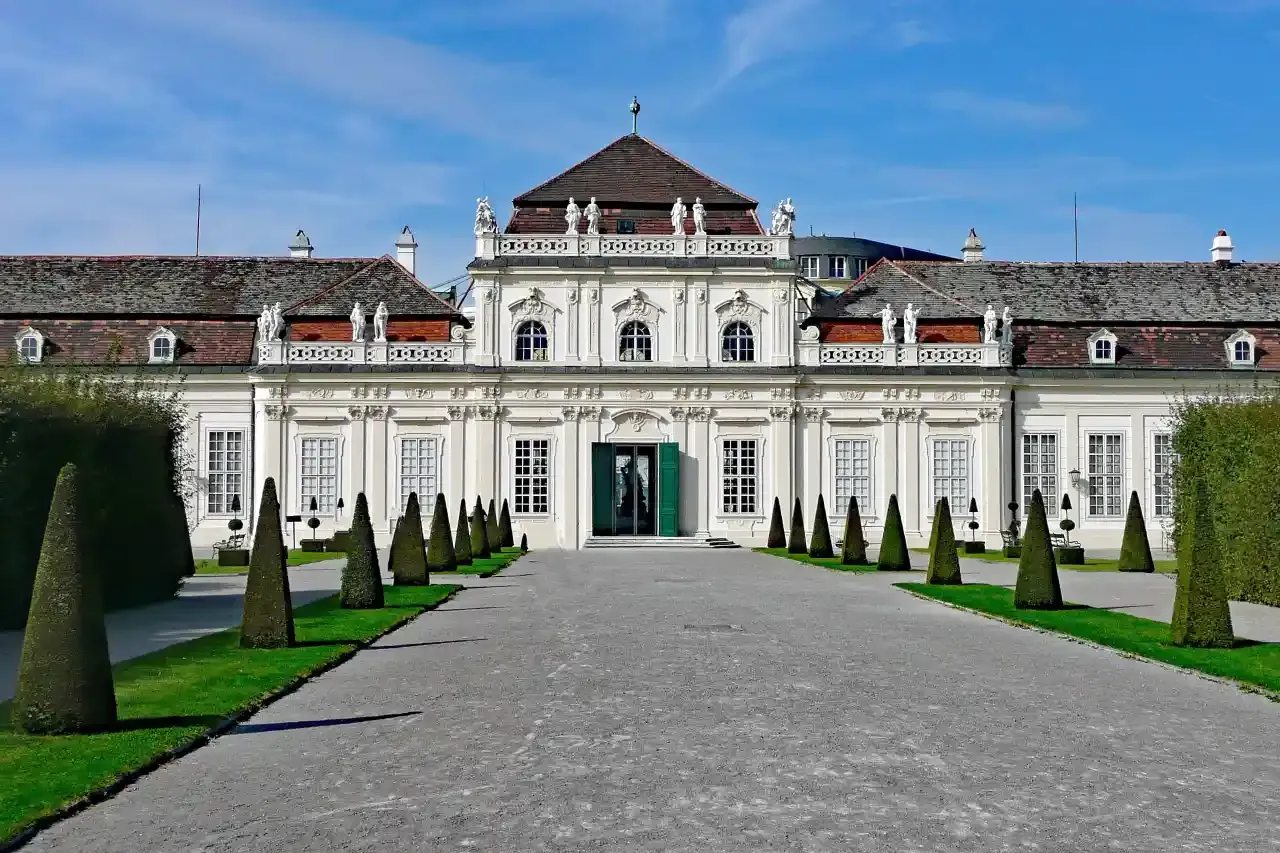
The Lower Belvedere Palace was built between 1714 and 1716 and served as Prince Eugene’s primary residence. It was designed to complement the Upper Belvedere, offering a more personal and private space for the prince.
Belvedere Palace architecture
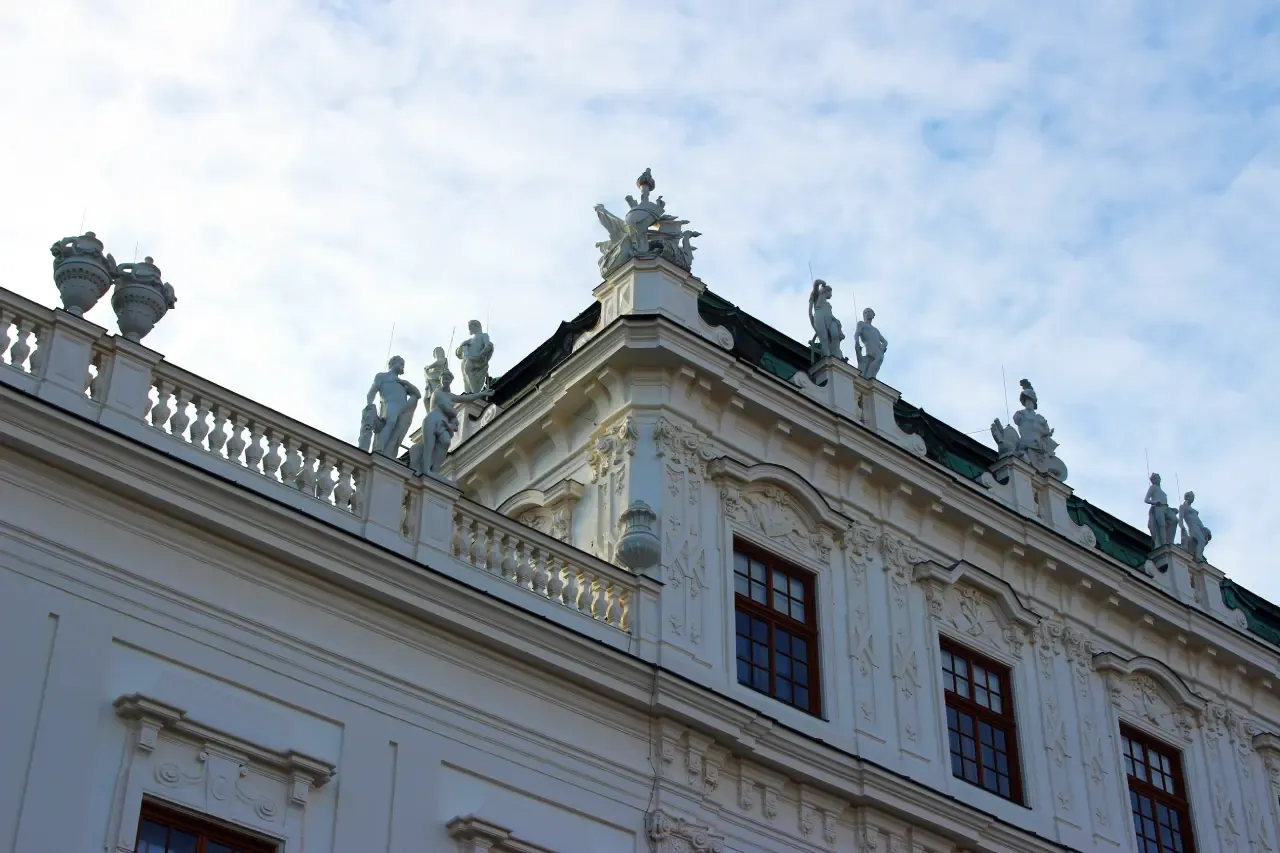
Belvedere Palace architecture is defined by its Baroque exterior, showcasing 18th-century palatial design. The complex consists of two buildings situated on a sloped landscape, connected by a central axis that emphasizes symmetry.
The Upper Belvedere features a facade with stuccowork, columns, and sculptures, serving as the visual anchor of the site. In contrast, the Lower Belvedere presents a horizontal profile that integrates with the surrounding environment. These structures are linked by tiered gardens and reflecting pools, which utilize the topography to establish perspective and scale across the masonry ensemble, creating a unified example of Austrian architecture.
Belvedere Palace architect
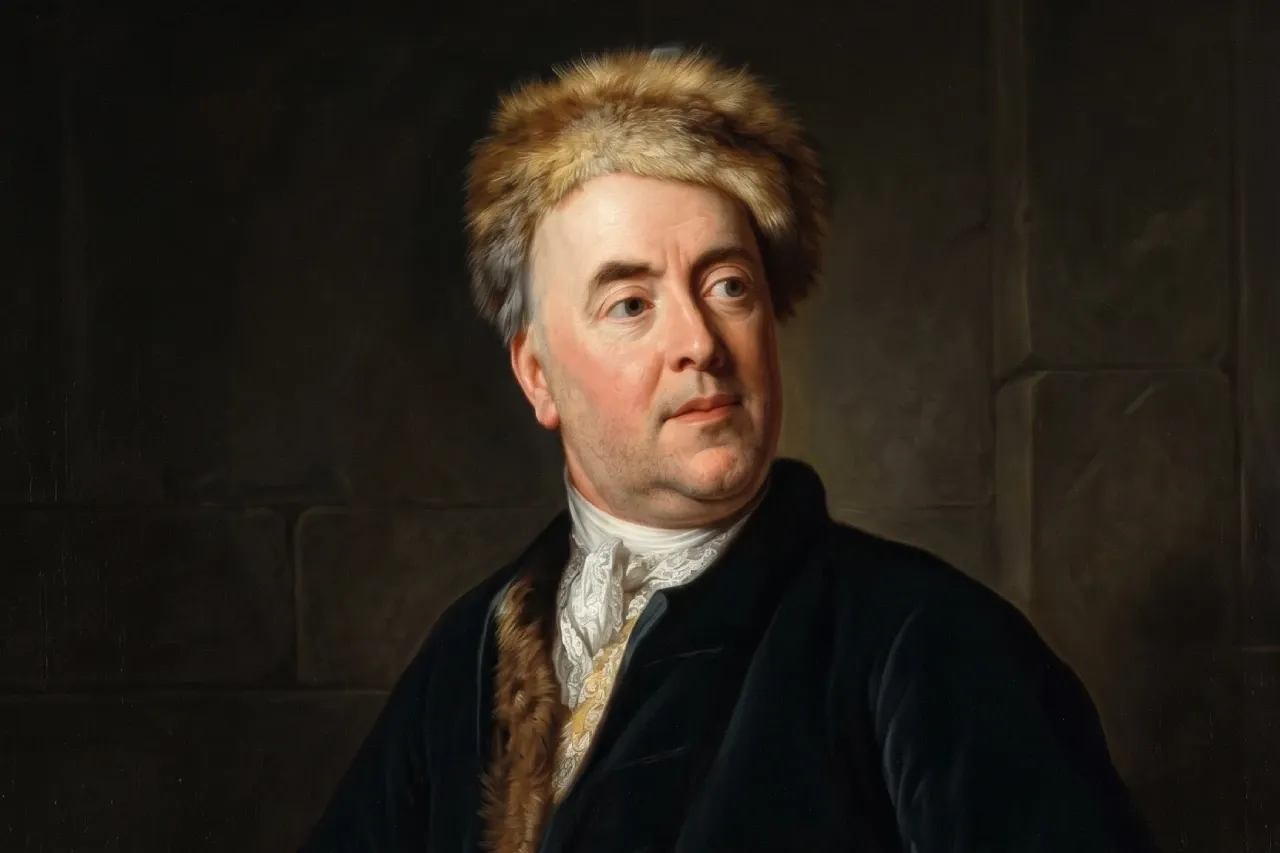
Belvedere Palace architect
The Belvedere Palace architect, Johann Lukas von Hildebrandt, designed the complex for Prince Eugene of Savoy in the early 18th century. Commissioned as a summer residence and a venue for entertaining, the site consists of the Upper and Lower palaces connected by tiered gardens.
Hildebrandt’s design utilizes symmetrical layouts and decorated facades that reflect the Baroque style of the period. The structure includes elements such as stuccowork and columns that define the building's exterior. As a primary example of Hildebrandt’s work, the palace remains a central part of Vienna’s urban landscape and serves as a historical record of the era’s architectural developments and the Prince's role as an art patron.
More information about the Belvedere Palace
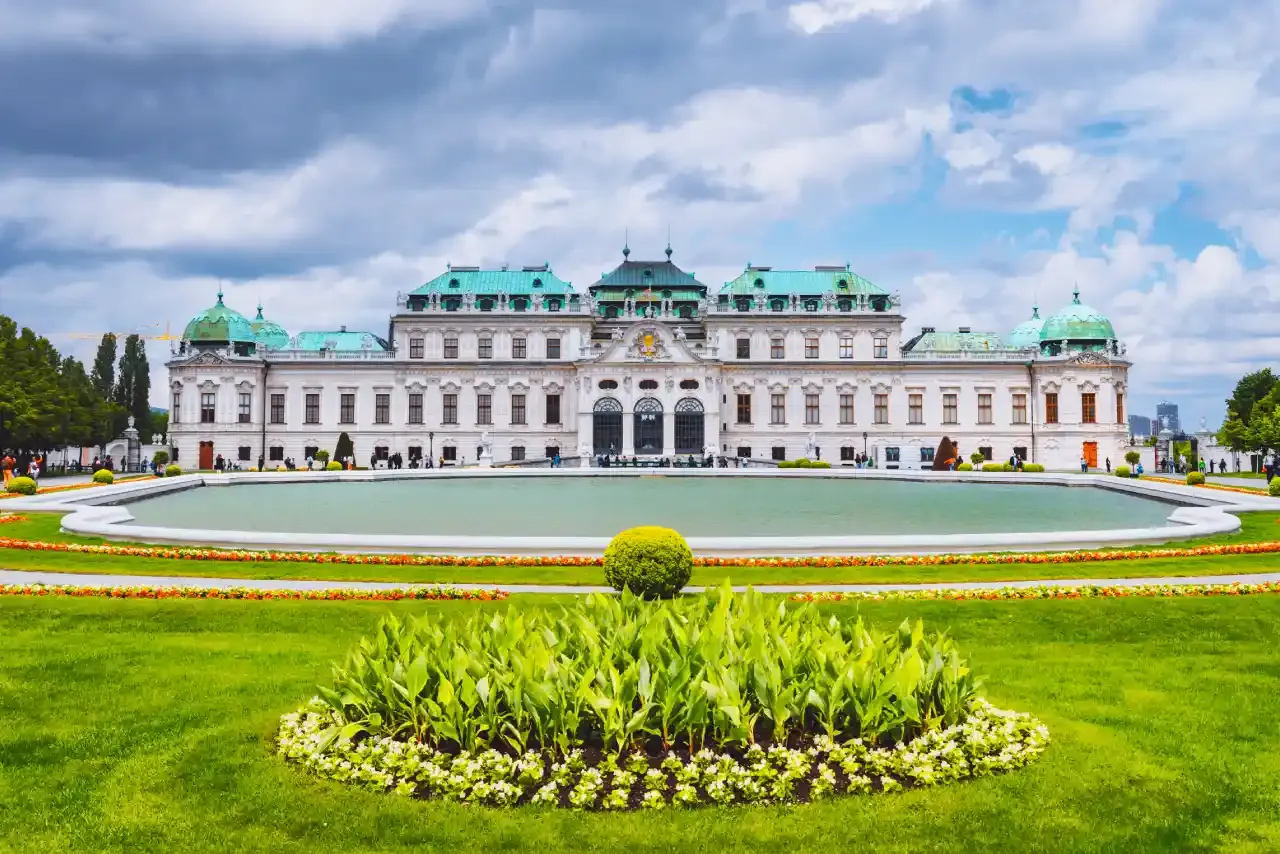
Belvedere Palace tickets
Entrance tickets to Belvedere Palace grant access to its renowned art exhibitions and beautiful gardens. The palace is divided into two main sections: the Upper Belvedere and the Lower Belvedere, each offering unique attractions and experiences.
When purchasing entrance tickets, visitors can choose to explore one or both sections of the palace, depending on their interests and the time available.