The Belvedere Palace houses an extensive art collection ranging from the Middle Ages to contemporary works. Major attractions include the Upper Belvedere, home to Gustav Klimt’s The Kiss and the ornate Marble Hall, connected to the Lower Belvedere by symmetrical French-style gardens. The complex also features the Palace Stables’ medieval treasury and the modern art exhibitions at Belvedere 21.
The Belvedere Palace is famous for housing Gustav Klimt’s The Kiss and for being the venue for the signing of the Austrian State Treaty in 1955, an event that restored independence to the country. Additionally, it integrates two buildings where collections from the Middle Ages are exhibited.
What can you see at the Belvedere Palace?
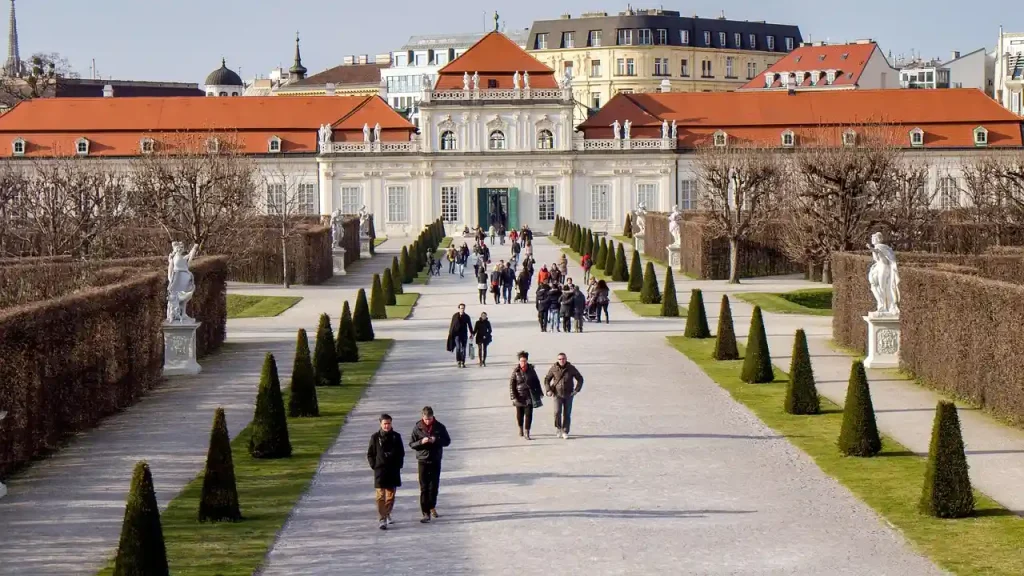
The Belvedere Palace is divided into three areas: the Upper Belvedere, the Lower Belvedere, and Belvedere 21. The site stands out for its Baroque architecture, French gardens, and a collection that spans from the Middle Ages to contemporary art.
What to see at Upper Belvedere?
The Upper Belvedere holds the permanent art collection, where it displays fundamental works of Austrian art, highlighting pieces from the Vienna Secession and international masters. Additionally, this building contains historic halls and gardens.
“The Kiss”, by Gustav Klimt
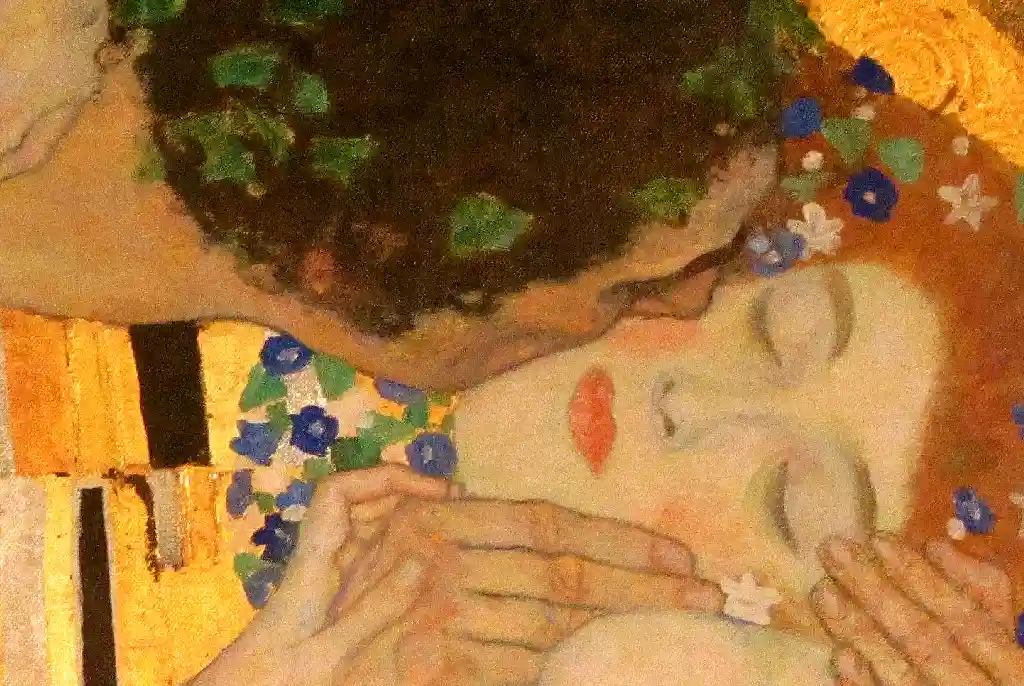
The work The Kiss by artist Gustav Klimt is on the first floor of the Upper Belvedere, inside the gallery dedicated to the Vienna Secession. The piece uses gold leaf to portray a couple in an embrace on a flowery meadow. Its importance lies in being the symbol of the country’s cultural identity and the ultimate example of Klimt’s decorative style.
The location of the work allows you to observe the mosaic technique and the use of materials that defined the author’s Golden Period. For some visitors, such as these Facebook users, the palace possesses a “wonderful collection” of Klimt and they emphasize that “his paintings are incredible.”
Photo: “Detail from Gustav Klimt’s ‘The Kiss’, Austrian National Gallery, Upper Belvedere Palace, Vienna” by Alex-David Baldi.
Marble Halls
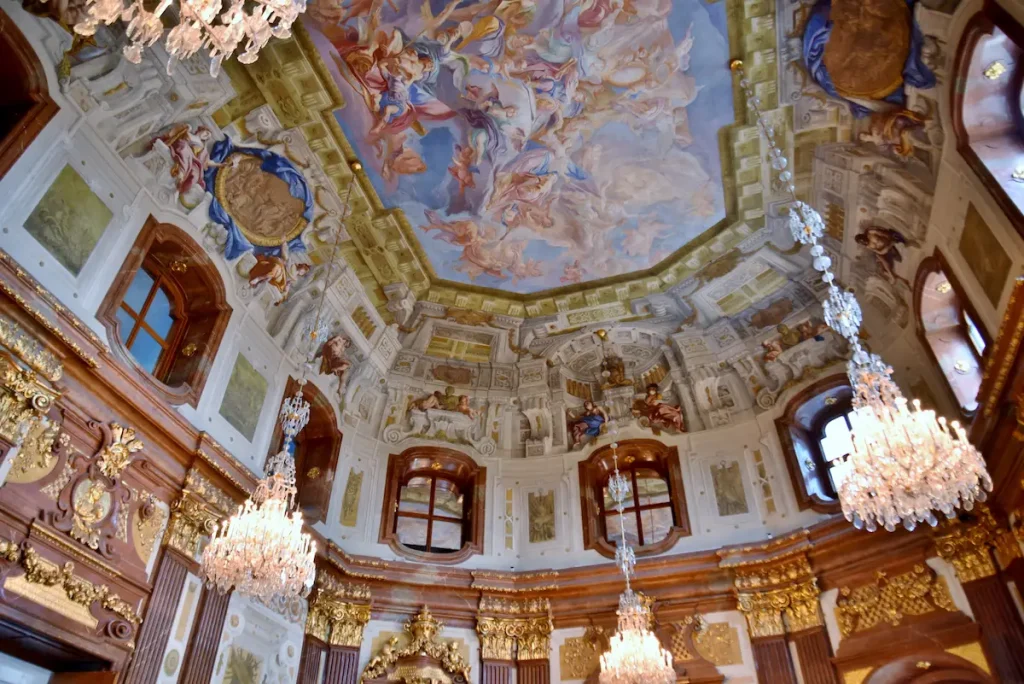
The Marble Hall has two floors and stands out for its walls lined with reddish marble, gilded decorations, and a ceiling fresco that celebrates the military victories of Prince Eugene of Savoy, one of the most prominent generals of the Habsburg Empire.
The political importance of this room was consolidated on May 15, 1955, when officials signed the Austrian State Treaty there. This document ended the occupation of the Allied powers and re-established Austria as a sovereign and democratic state.
From its windows, the hall offers a symmetrical perspective of the gardens and the city of Vienna. The architecture of the hall reflects the imperial power of the time and serves as a setting for official events, maintaining its function as a symbol of modern Austrian freedom.
Belvedere Gardens
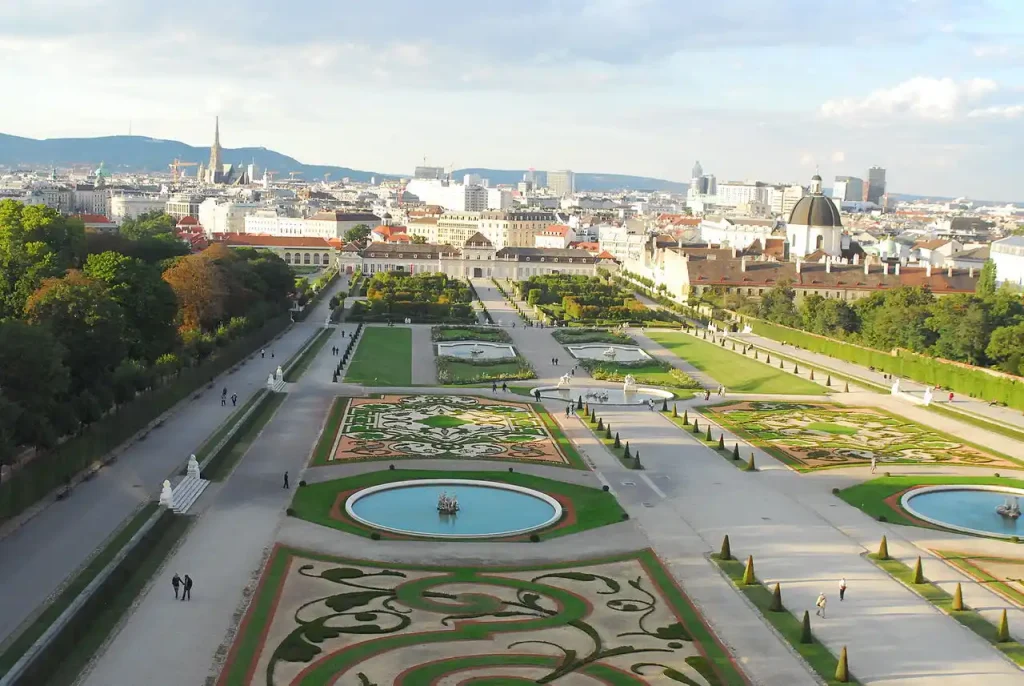
The Belvedere Gardens connect the Upper and Lower palaces through a French-style design created by the architect and engineer Dominique Girard. The space follows a formal scheme with symmetrical parterres, fountains with water features, waterfalls, and mythological sculptures.
A Tripadvisor user notes: “The most attractive part of the Belvedere Palace is its spectacular back garden between the Upper and Lower Belvedere Palace buildings. From this back garden, you can enjoy seeing both palace buildings and the center of Vienna in the distance.” The layout of the terrain takes advantage of the natural slope to create terraces that offer panoramic views.
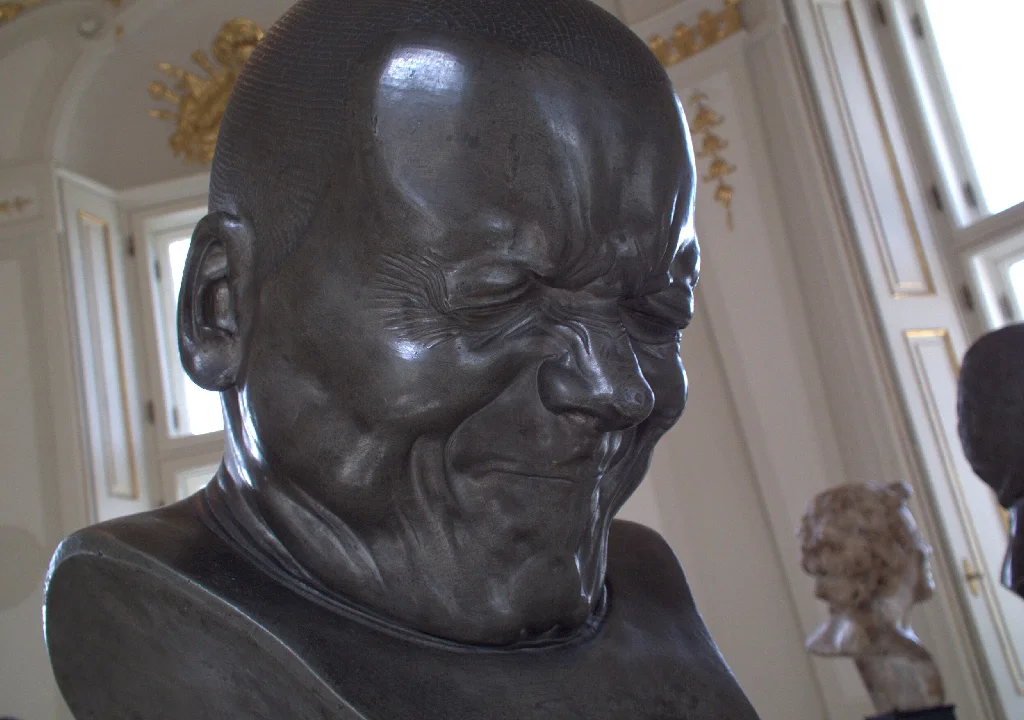
The Belvedere Palace houses a series of sculptures by the Baroque artist Franz Xaver Messerschmidt known as Character Heads. These pieces consist of metal or alabaster busts that capture extreme facial expressions and exaggerated gestures. The author created these works during the 18th century, moving away from Neoclassical idealism to explore human physiognomy and psychology in a radical way for his time.
Each of the works represents a specific emotional or physical state, such as yawning, pain, or forced laughter. These sculptures are fundamental to understanding the transition toward realism and the study of emotions in plastic art.
The location of the busts allows visitors to appreciate up close the anatomical details and the casting technique that Messerschmidt employed to document his research on the human face.
Photo: “Franz Xaver Messerschmidt – Charakterkopf” by DALIBRI.
Permanent Collection
The permanent exhibition is organized so that the viewer understands the transition between sacred art, Biedermeier, and modern avant-gardes. As a user on Reddit states: “The Belvedere has a great art collection,” which presents a chronological evolution from the medieval period to the 20th century.
The rooms house iconic pieces that define European and Austrian art history, allowing an integral view of regional aesthetic development. The collection includes the following highlighted works, artists and styles:
Napoleon Crossing the Alps (Jacques-Louis David)
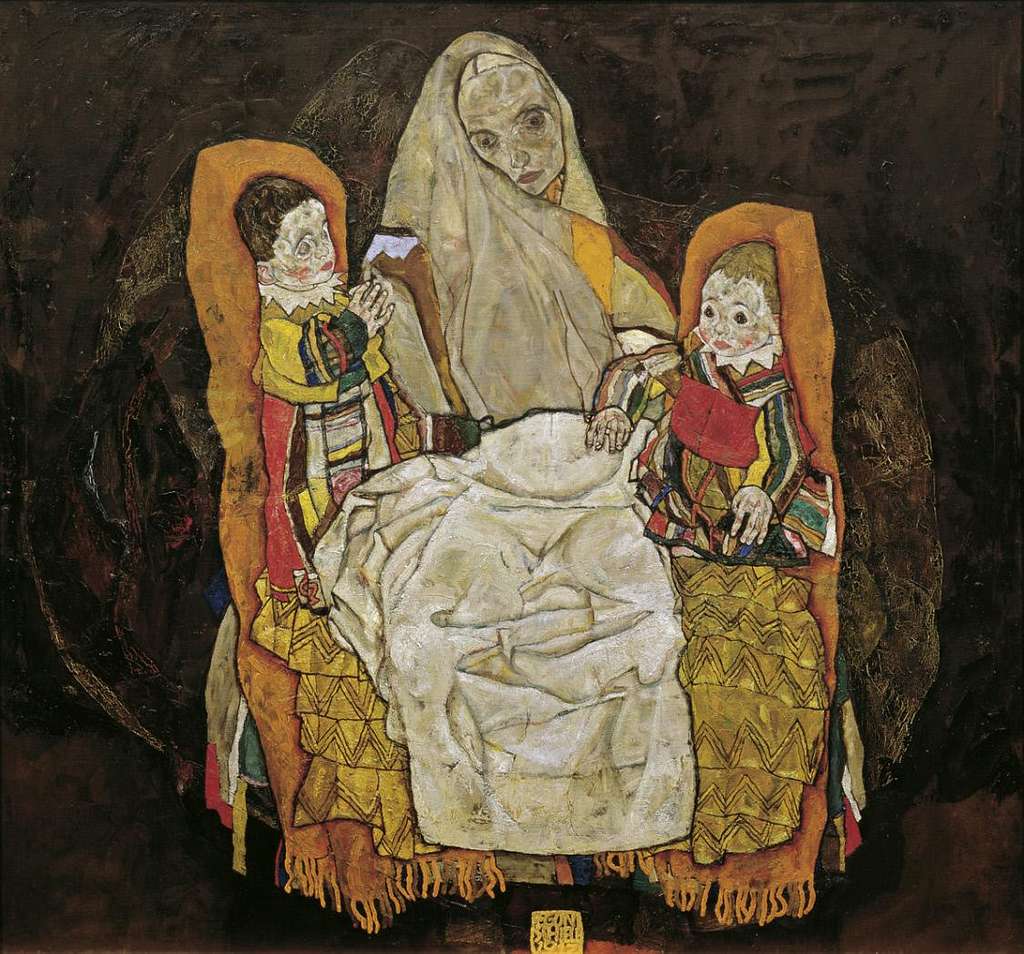
Mother with Two Children III (Egon Schiele Art)
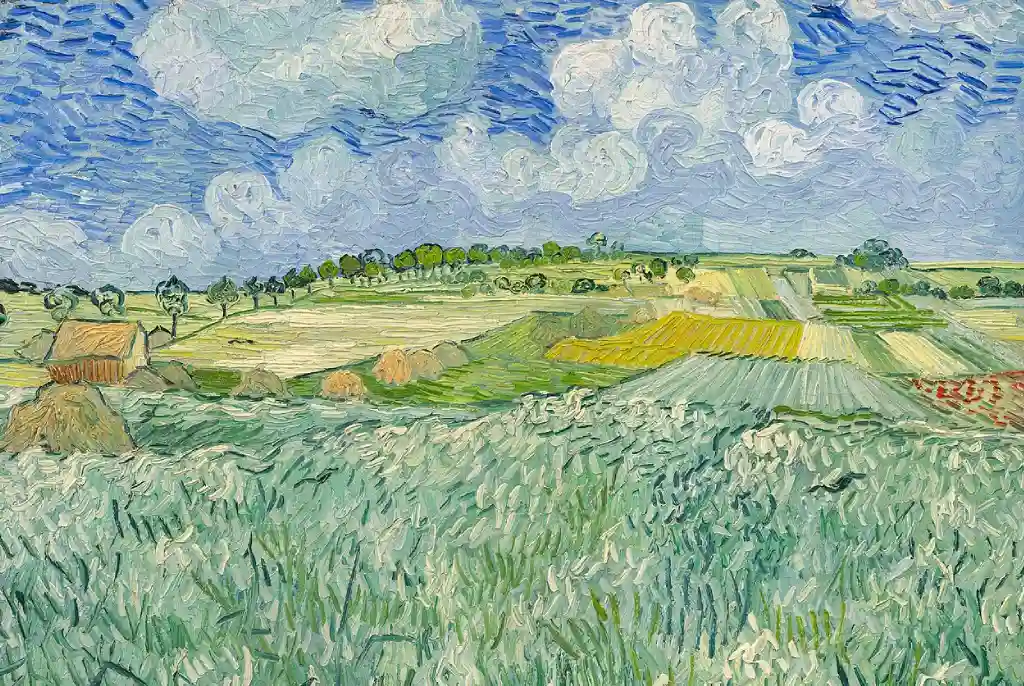
The Plain of Auvers (Vincent van Gogh)
Oskar Kokoschka Art
Claude Monet
Auguste Rodin
László Moholy-Nagy
Biedermeier
French Impressionism
What to see at Lower Belvedere?
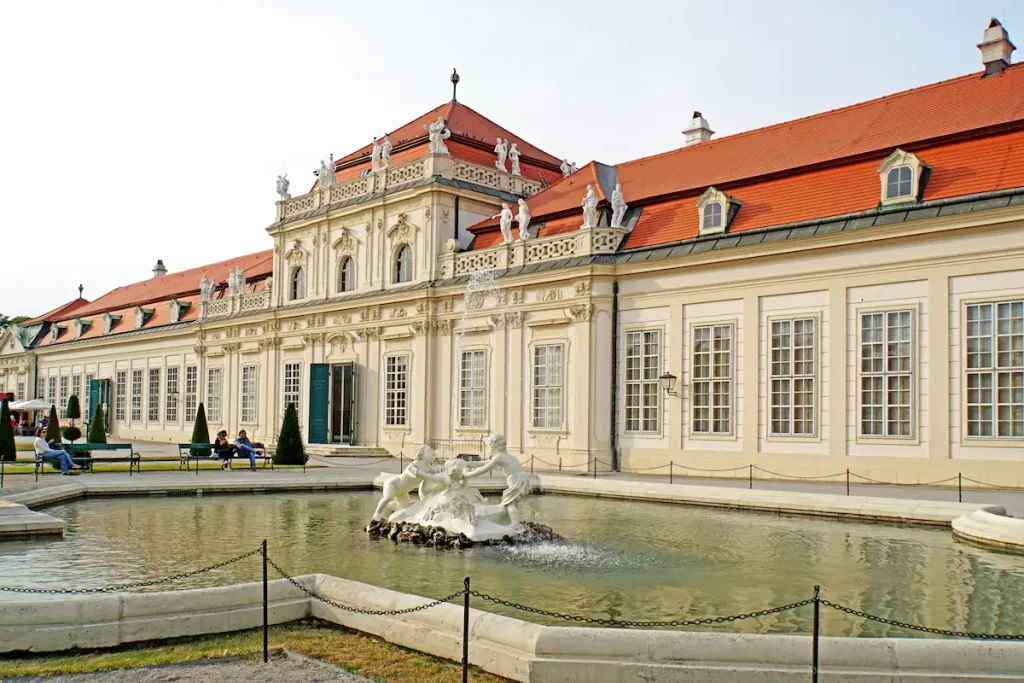
The Lower Belvedere is primarily dedicated to the organization of temporary art exhibitions. Additionally, visitors can tour the former private apartments and ceremonial rooms of Prince Eugene, which preserve the original decoration of the Baroque palace.
Palace Stables
The Palace Stables are located at the eastern end of the Lower Belvedere and today function as a specialized exhibition space.
Originally, this building housed Prince Eugene’s personal horses, but after a renovation, it transformed into the Belvedere Treasury, where the institution displays its collection of medieval art, including altarpieces, painted panels, and wooden sculptures from the 14th and 15th centuries.
The interior architecture preserves elements of its original function, adapted for the conservation of delicate Gothic pieces.
The location of the stables allows a continuous flow from the main rooms of the Lower Belvedere, offering a perspective on religious devotion and the craftsmanship of the Middle Ages in the Alpine region and Central Europe. It is a recommended stop for understanding the origins of Austrian art before the Renaissance.
Temporary Exhibitions
Temporary exhibitions at the Lower Belvedere offer a analysis of specific artists or determined historical periods. These rotating events allow the museum to display pieces that are not part of the permanent collection.
The location of these shows in historic rooms, such as the Marble Gallery or the Gold Cabinet, adds a unique contextual value to the exhibited works.
The exhibitions usually change every few months, covering themes ranging from Symbolism to international Modernism. This rotation ensures that every visit to the palace offers a distinct and updated experience regarding art history trends and research.
Photo: “Belvedere at Wintertime – Lower Belvedere Interior” by Deror avi.
Orangery
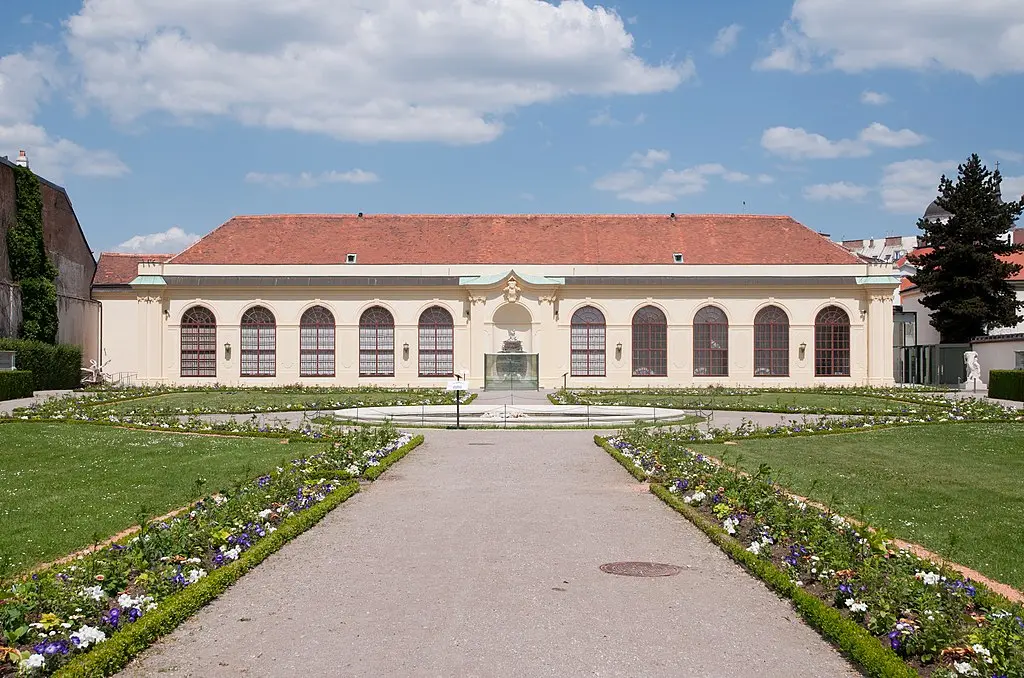
The Orangery is situated next to the Lower Belvedere. It originally functioned as a greenhouse for exotic plants during the winter, especially orange trees. Today, this building is an exhibition hall that combines the Baroque structure with a minimalist interior design.
Its architecture stands out for the large south-facing windows that allowed sunlight to enter for the vegetation. The transition from greenhouse to art gallery reflects the adaptability of the Belvedere complex to current cultural needs.
Its location on the lower level of the garden makes it easily accessible after touring the private apartments, offering a significant architectural contrast between the opulent Baroque and the modern functionality of current museums.
Things to see at Belvedere 21
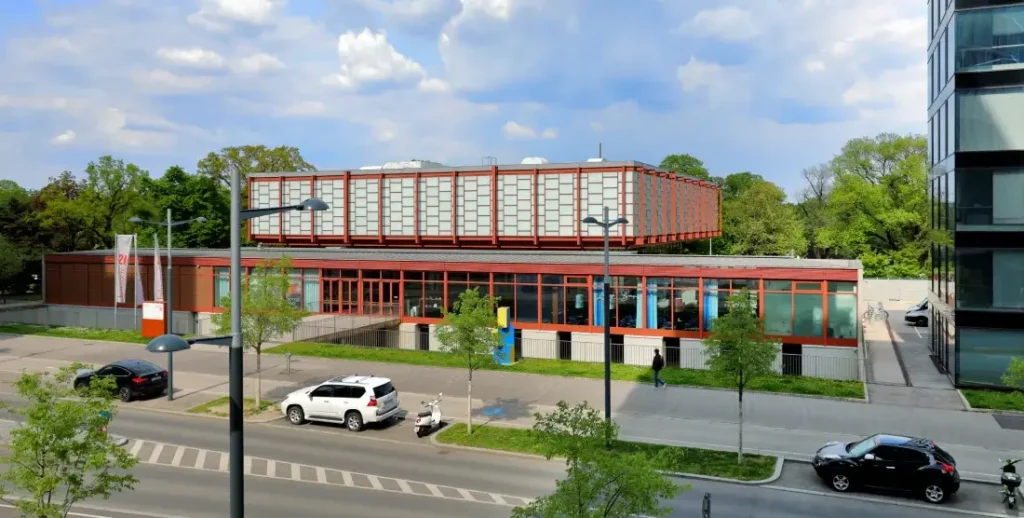
Belvedere 21 represents the contemporary facet of the complex, focusing on art from the 20th and 21st centuries. This modernist building, designed by Karl Schwanzer, offers temporary exhibitions, a sculpture garden, and a cinema.
Temporary Exhibitions
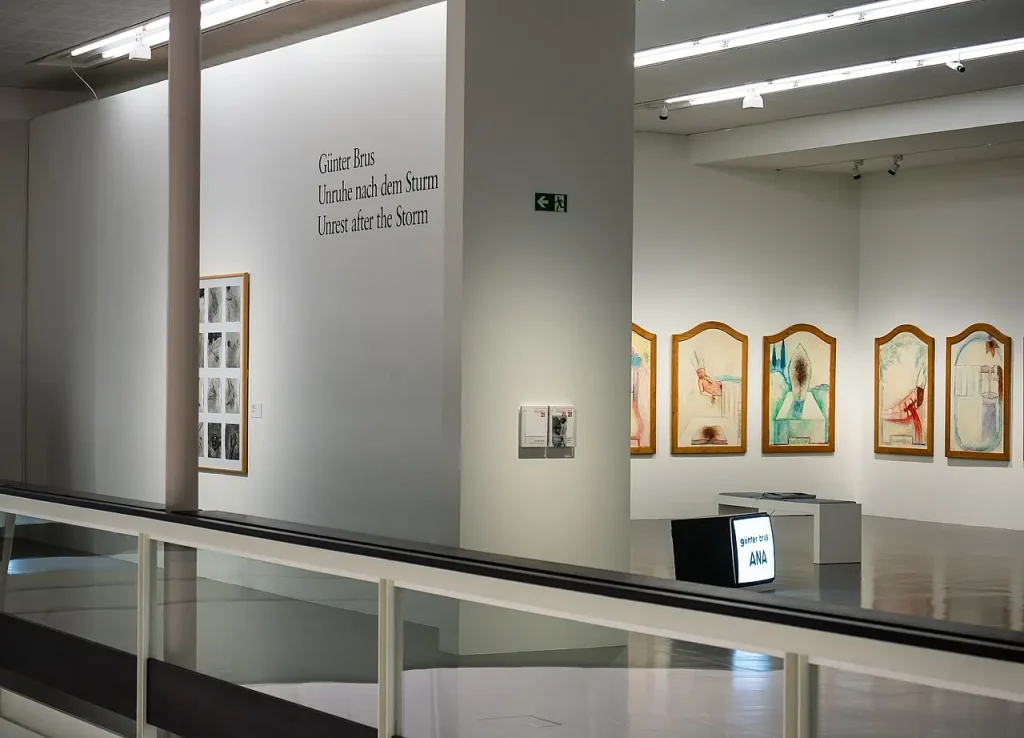
Belvedere 21 acts as a dynamic platform for contemporary art, presenting temporary exhibitions of national and international artists active from the post-war period to the present. Unlike the historic palaces, this space focuses on social themes, media experimentation, and new visual narratives.
The importance of these exhibitions lies in their ability to question current affairs and show the evolution of the most recent Viennese art scene. Visitors can find videos, photographs, contemporary paintings, and interdisciplinary projects. The programming seeks to connect the historical heritage of the Belvedere with the concerns of the present.
Photo: “Belvedere 21” by Tudoi61.
Sculpture Garden
The Sculpture Garden of Belvedere 21 is one of the complex’s gardens. This space surrounds the modernist building and houses three-dimensional works by contemporary artists. The garden functions as an extension of the interior galleries.
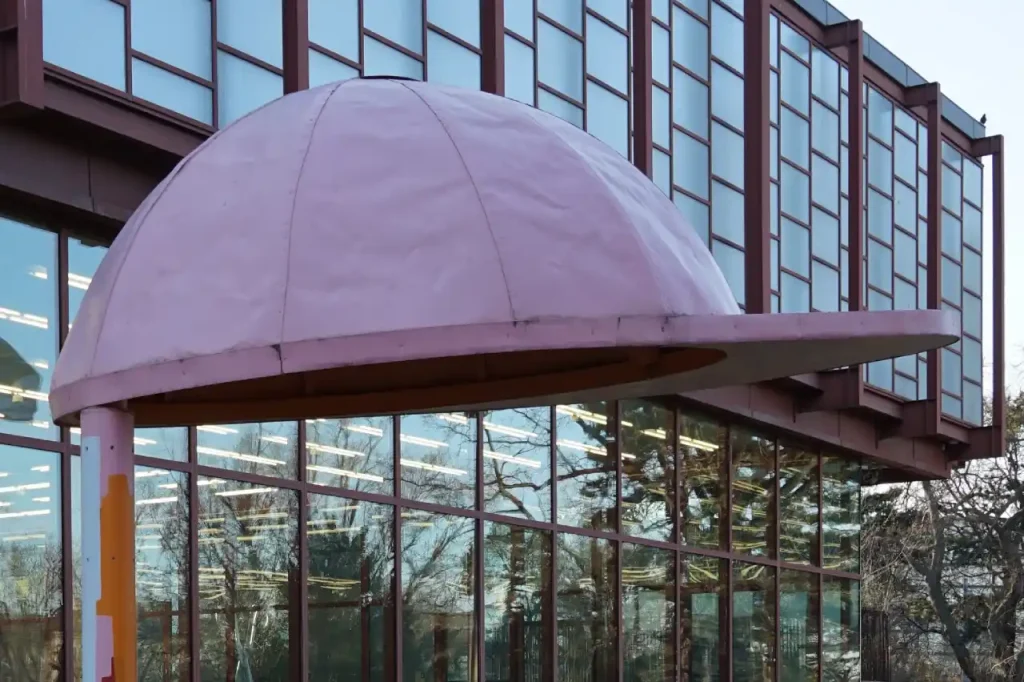
The outdoor collection includes permanent works and loans that explore form, material, and public space. Its importance lies in offering an accessible aesthetic experience without the restrictions of a closed gallery environment. One of the exhibited works is “B-Girls, go!” by Maruša Sagadin, which reinterprets a baseball cap through pop art.
Belvedere 21 also stands out for housing the Blickle Kino or Blickle Cinema, the only cinema in Vienna that preserves its original 1950s design. This screening room is a fundamental piece of post-war architecture and is used for auteur film cycles, art documentaries, and academic presentations. The design of the cinema, with its retro furniture and aesthetics, offers additional historical value to the building.
Furthermore, the structure of Belvedere 21 itself is an object of study: it was the Austrian pavilion for the Brussels World Expo in 1958 before being moved to its current location. Visitors interested in modern architecture can appreciate the innovative use of industrial materials, which radically differentiates this section of the complex from the Baroque structures of the Upper and Lower Belvedere.
Things to do near the Belvedere Palace
There are multiple points of cultural and historical interest located a short distance from the Belvedere Palace, allowing visitors to complete their itinerary through the center of Vienna and the Landstraße district. These sites offer a complementary perspective on imperial history and current urban life:
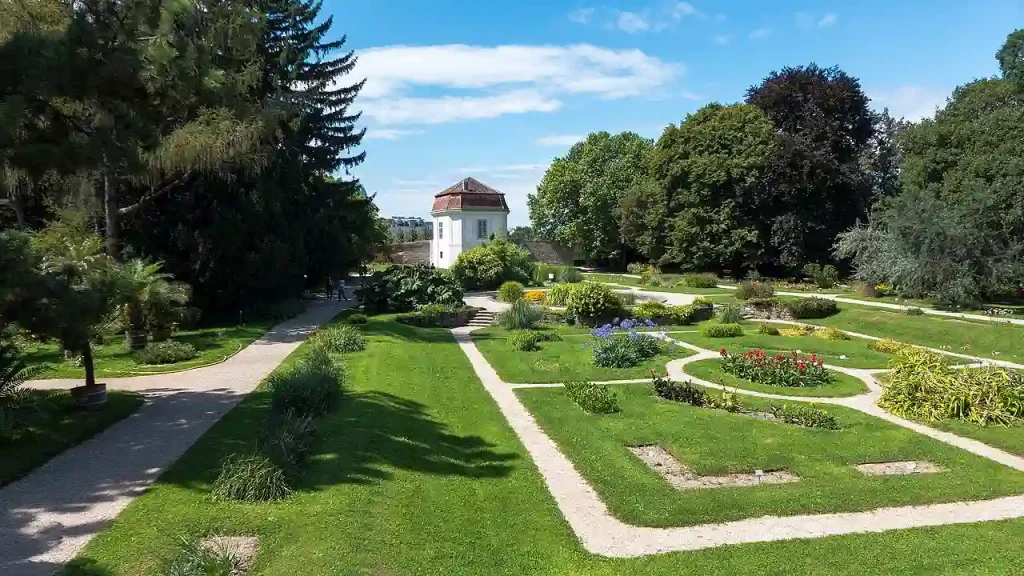
Botanical Garden of the University of Vienna
Right next to the Belvedere is this green space that houses thousands of plant species for research and walking purposes.
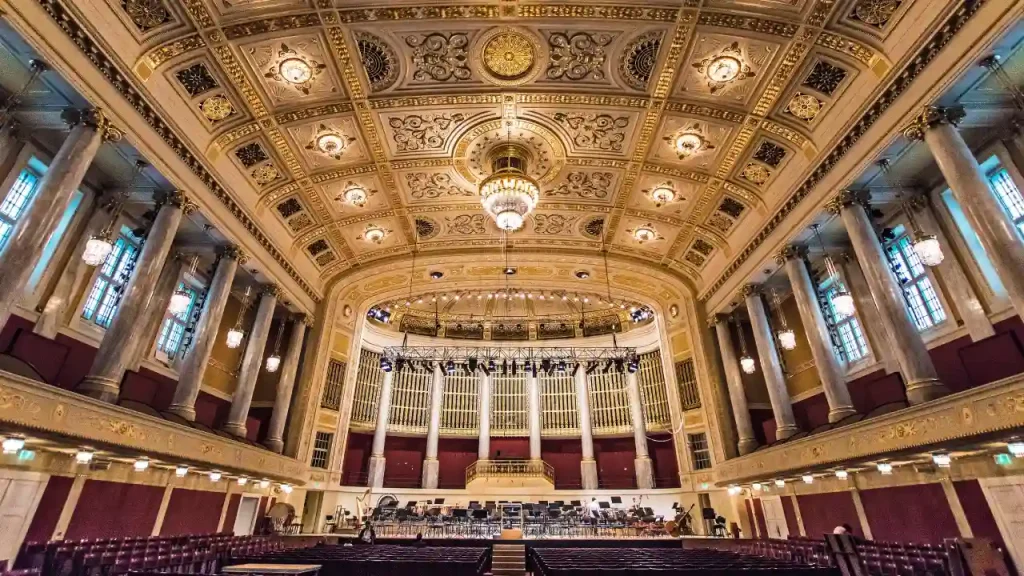
Konzerthaus
About 15 minutes walking is this concert hall where classical and contemporary music performances are held.
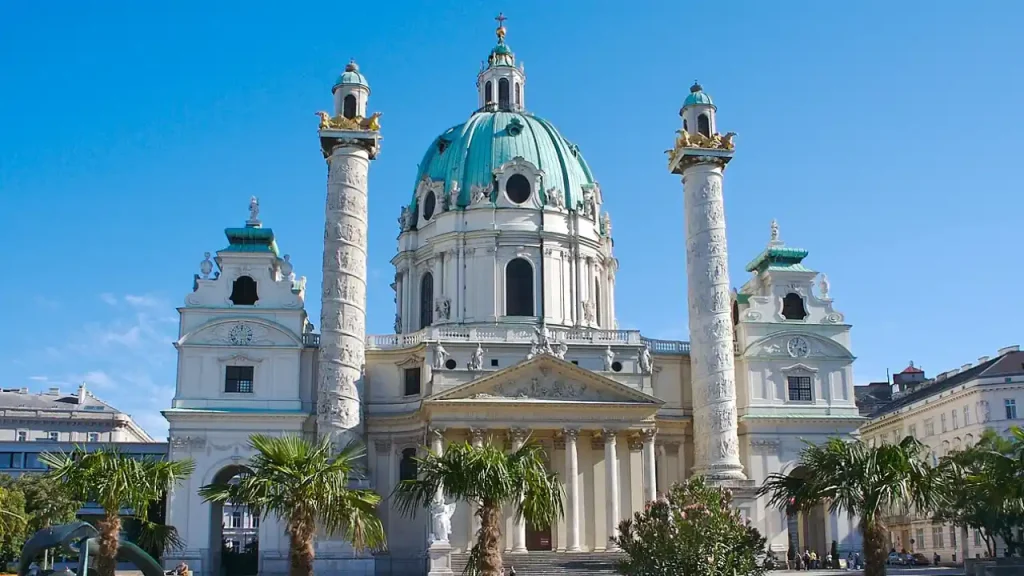
St. Charles Church (Karlskirche)
In Karlsplatz, about 15–20 minutes on foot, is this Baroque temple with its dome and columns inspired by Trajan’s Column.
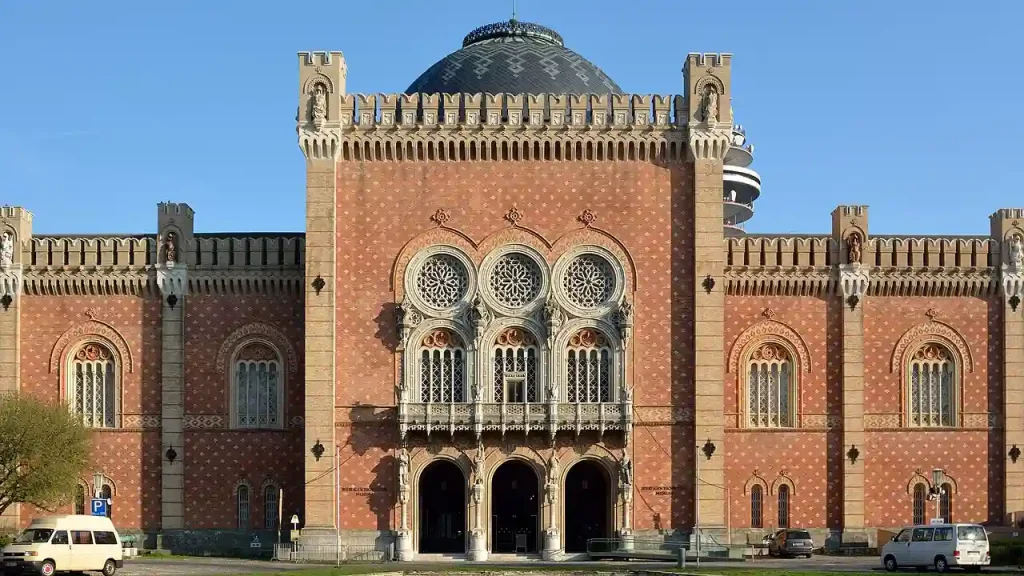
Heeresgeschichtliches Museum
Located in the Arsenal (a 25–30 minute walk), the Museum of Military History showcases the Austrian Empire’s armed forces and historical conflicts.