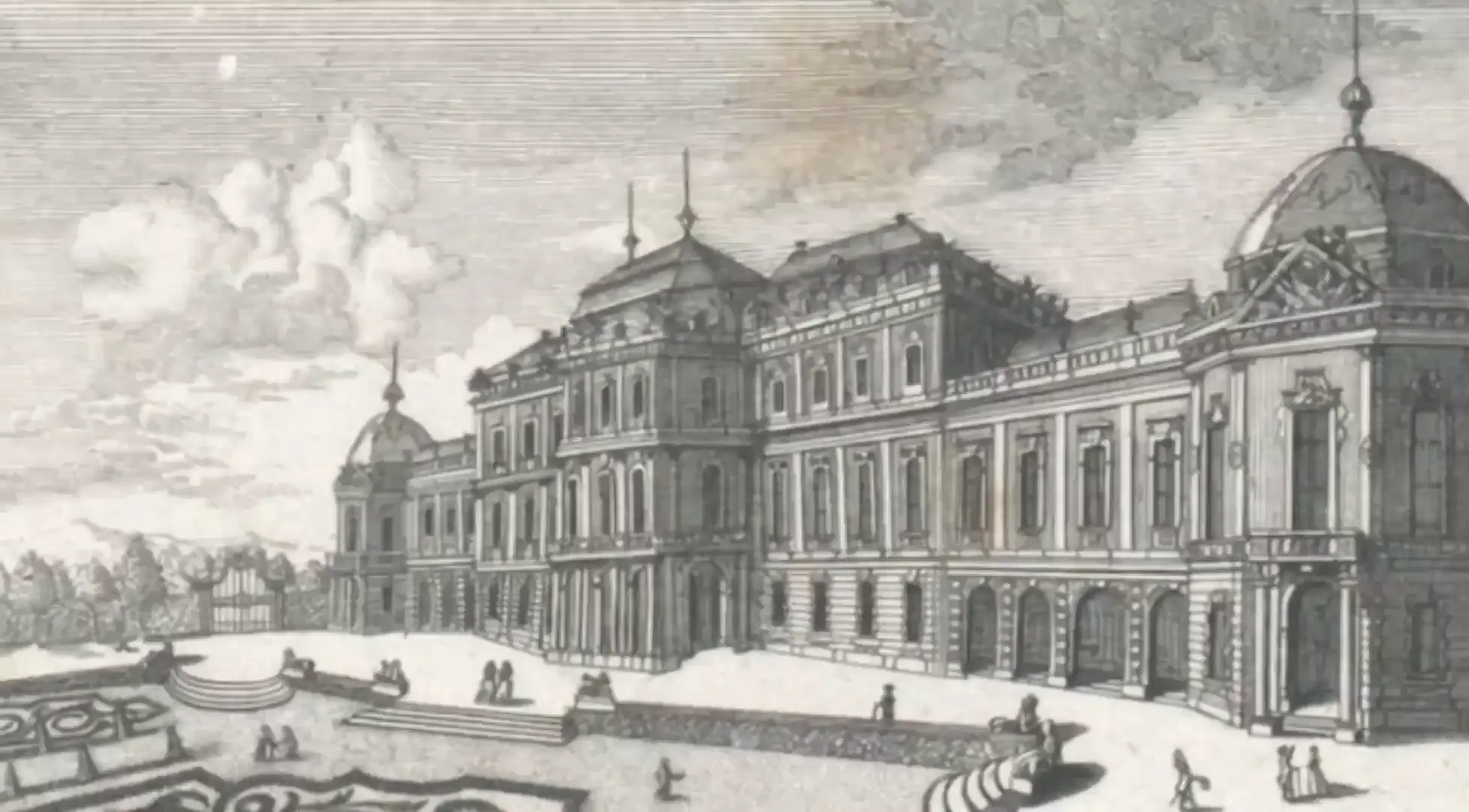
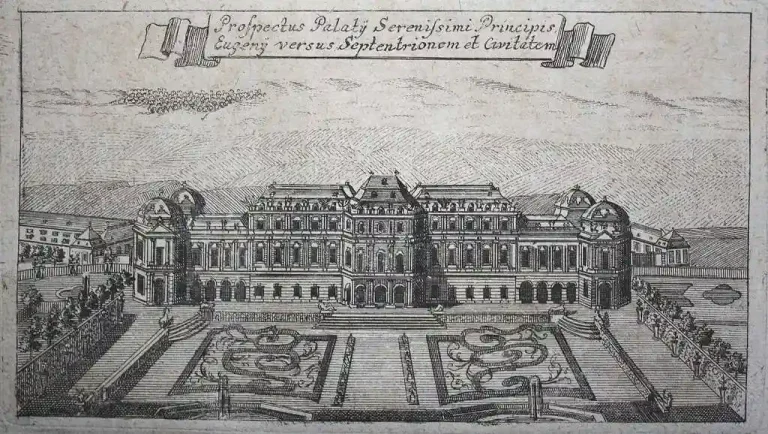
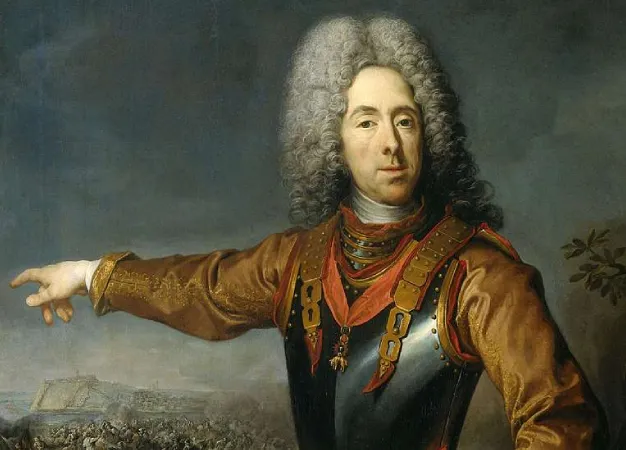
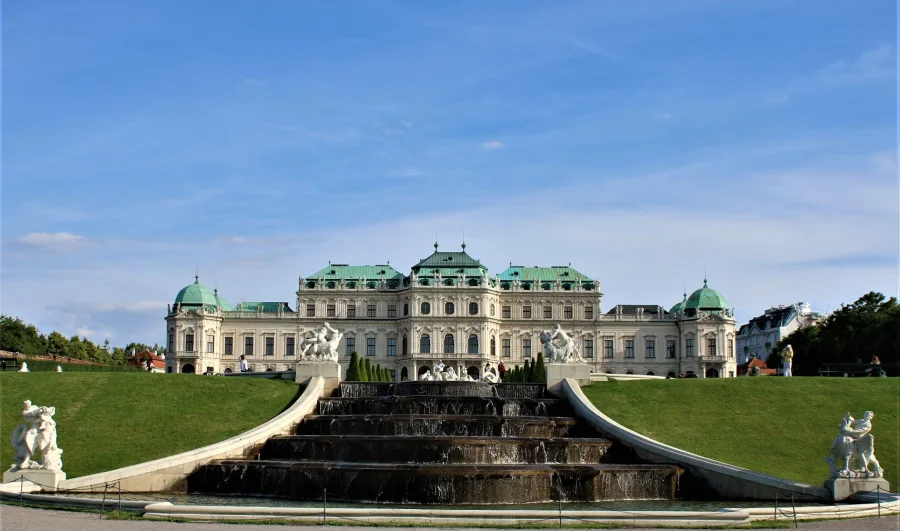
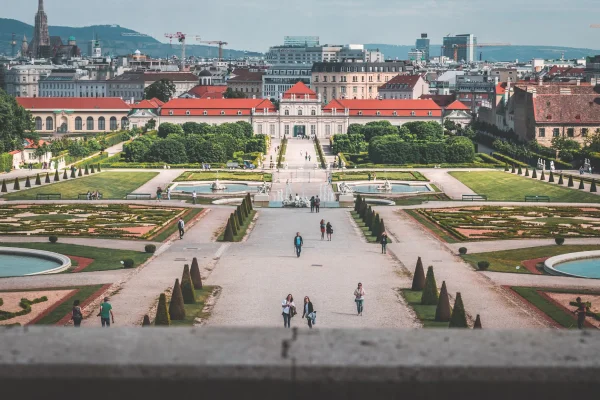
The history of the Belvedere Palace in Vienna dates back to the beginning of the 18th century, when Prince Eugene of Savoy commissioned its construction as a summer residence in 1712. This architectural complex, a masterpiece of the Baroque style, reached final completion around 1723 and today functions as an art museum.
The chronological evolution of the Belvedere Palace reflects its transformation from a private residence to a national museum:
1712: Prince Eugene of Savoy orders the start of construction on the Lower Belvedere.
1716: Works on the Lower Belvedere conclude, primarily intended as the prince’s residential living quarters.
1717: Construction of the Upper Belvedere begins on the highest part of the grounds.
1723: The construction of the Upper Belvedere finishes, designed to host receptions and representative functions.
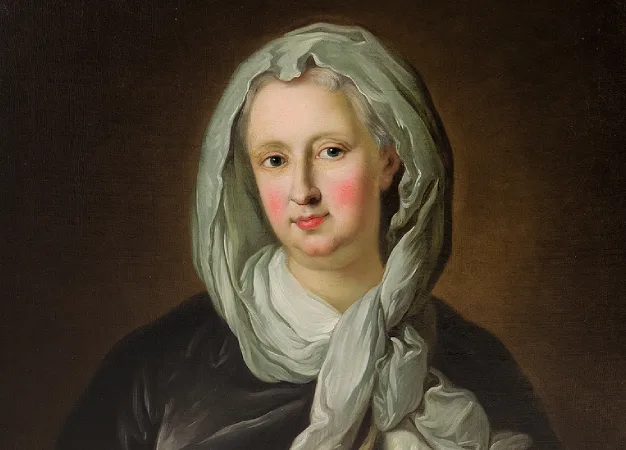
1736: Prince Eugene of Savoy dies and his niece, Princess Victoria of Savoy-Soissons, inherits the property; however, as she has no interest in maintaining it, she begins to auction and sell the art collections and the library almost immediately.
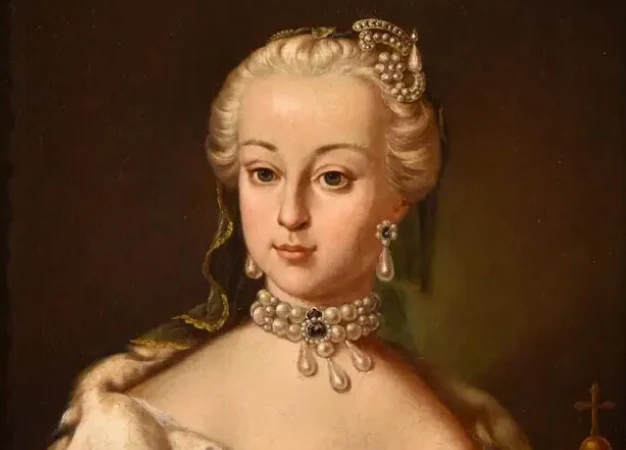
1754: Empress Maria Theresa of Habsburg buys the complex from Victoria of Savoy-Soissons and the complex begins its transformation from a private residence to a courtly and representative space for the Habsburg dynasty.
1770: The palace hosts the wedding banquet of Marie Antoinette and the future Louis XVI.
1777: By order of Emperor Joseph II, the imperial collection of paintings moves to the Upper Belvedere, consolidating its function as an exhibition space.
1780: Maria Theresa dies on November 29, 1780, in Vienna, after suffering respiratory problems.
1781: Under the reign of her son Joseph II, the Upper Belvedere opens to the public in a regulated manner, making it one of the first public museums in the world.
1806: The Ambras Collection moves to the Lower Belvedere for protection against Napoleonic troops.
1891: A large part of the imperial collections moves to the newly inaugurated Kunsthistorisches Museum, which temporarily reduces the Belvedere’s museum-centric importance.
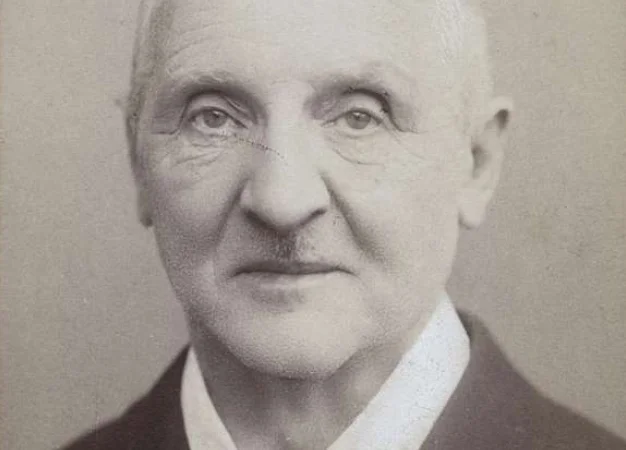
1895: Anton Bruckner, the composer, lived his final months at the Belvedere, residing in the caretaker’s quarters (Kustodenstöckl), where he died in October 1896.
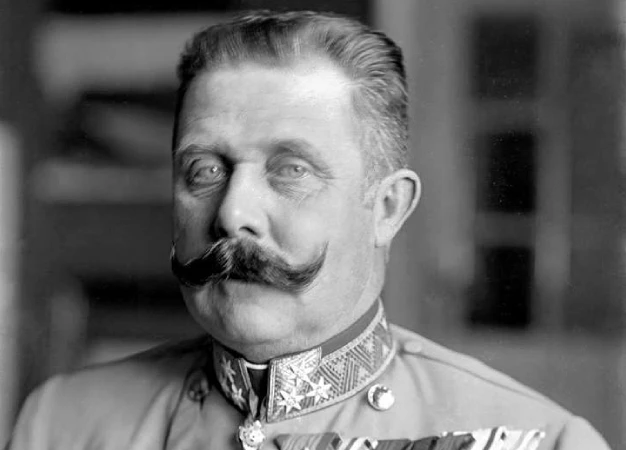
1896: Archduke Franz Ferdinand establishes his official residence in the palace.
1903: The “Moderne Galerie” opens in the Lower Belvedere, the origin of the modern art collection.
1918: The Austrian state assumes ownership of the Belvedere after World War I and creates the Austrian Gallery.
1945: The palace suffers architectural damage due to continuous bombing during World War II.
1948: Partial reopening of the Belvedere following initial restoration work.
1955: The Austrian State Treaty is signed in the Marble Hall of the Upper Belvedere. This marks the restoration of national sovereignty.
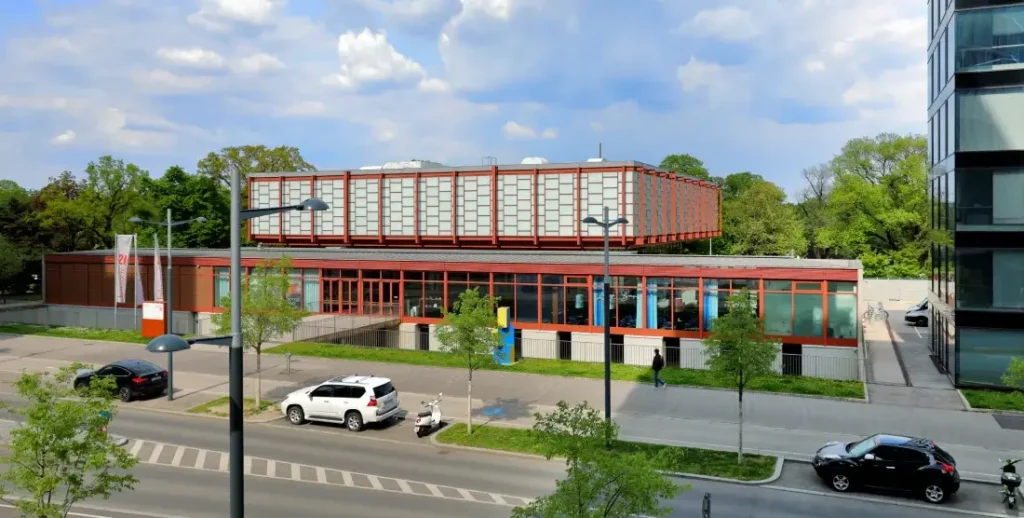
1962: An exhibition space dedicated to contemporary art opens in the former Austrian pavilion from the 1958 Brussels World Expo, a precursor to the current Belvedere 21.
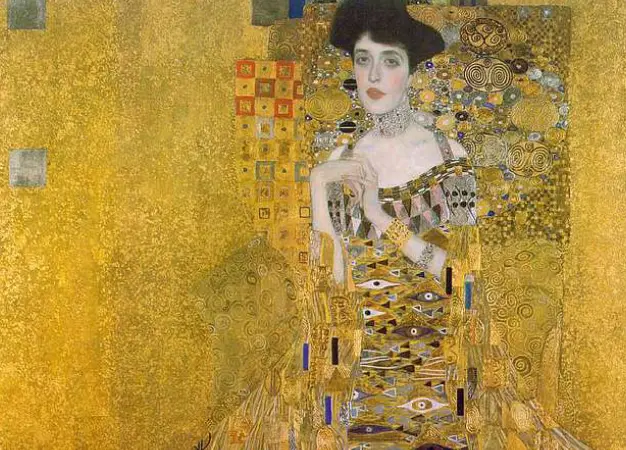
2006: Following a long legal process, the Belvedere restitutes five paintings by Gustav Klimt to the heirs of the Bloch-Bauer family, including the famous “Portrait of Adele Bloch-Bauer I.”
2010: Parties reach a historic agreement for the restitution of Egon Schiele’s “Portrait of Wally,” following years of international litigation over looted art.
2011: Following extensive renovation and adaptation by architect Adolf Krischanitz, Belvedere 21 officially reopens its doors under that name.
2023: The Belvedere Palace celebrates its 300th anniversary with a series of special exhibitions titled “Golden Spring”.
Who built the Belvedere?
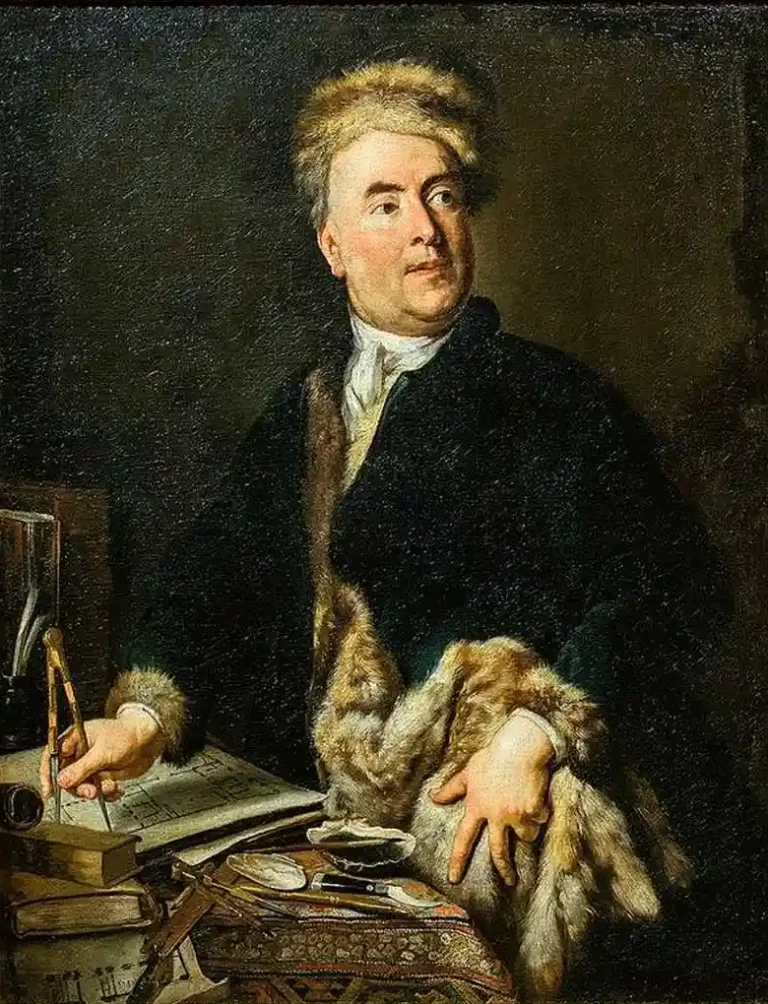
The architect Johann Lukas von Hildebrandt designed the Belvedere complex under a direct commission from Prince Eugene of Savoy. The prince, a successful military leader of the Habsburg monarchy, sought a summer residence that would project his immense political power and his refined artistic taste. This property functioned in a complementary way to the Winter Palace of Prince Eugene, located in central Vienna, where the nobleman carried out his administrative duties during the cold months.
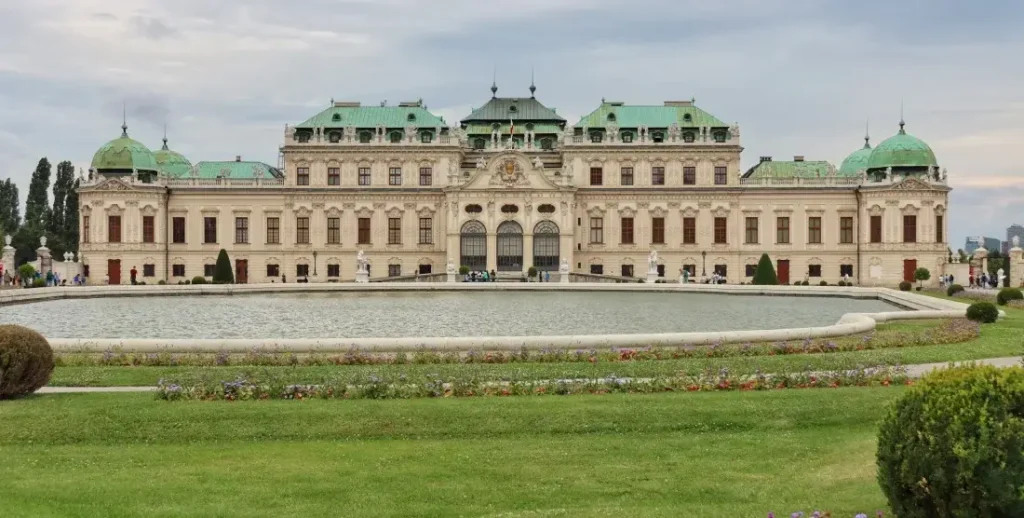
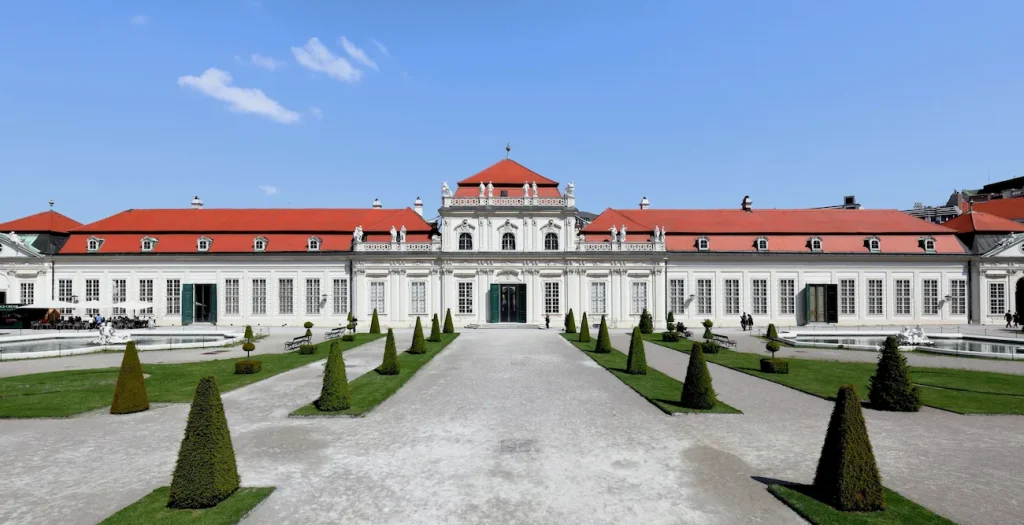
The design by Johann Lukas von Hildebrandt represents the peak of the Baroque style in Austria. The structure of the complex divides into two main buildings connected by a formal garden: the Upper and Lower Belvedere.
The architect applied spatial design principles to create an ascending storyline. Prince Eugene of Savoy desired that the Lower Belvedere serve as a private living space, while the Upper Belvedere fulfilled a purely ceremonial and exhibition function.
A central element of the architectural design is the parterre. The French designer Dominique Girard, who was a disciple of André Le Nôtre at Versailles, designed the gardens that link both palaces. The parterre integrates mythological sculptures, fountains, and perfectly trimmed hedges that reinforce the geometry of the whole.
The collaboration between the architect and the landscape designer allowed the Baroque style to extend beyond the walls of the buildings, creating an aesthetic unity between domesticated nature and carved stone.
When was the Belvedere Palace built?
The construction of the Belvedere Palace officially began in 1712 with the laying of the foundations of the Lower Belvedere. This first building, intended as a private residence, was finished in 1716. Immediately afterward, in 1717, the construction of the Upper Belvedere started, and those works concluded in 1723.
The French gardens that integrate the complex were designed simultaneously between 1712 and 1725. Later, in the 20th century, the building known as Belvedere 21 was added to the complex, originally built for the 1958 Brussels World Expo and moved to its current location in 1962.
What happened after the death of Prince Eugene of Savoy?
After the death of Prince Eugene of Savoy in 1736, the fate of the complex changed radically due to the military leader’s lack of direct heirs. His immense fortune, including the Belvedere, passed into the hands of his niece, Princess Victoria of Savoy-Soissons.
Victoria showed no interest in maintaining the property and began to auction the collections and assets of her uncle. In 1752, Empress Maria Theresa of the Habsburg dynasty acquired the complex to integrate it into the crown’s heritage.
Under the management of Maria Theresa, the Belvedere assumed institutional and cultural functions. In 1781, the Empress and her son Joseph II decided to move the imperial painting gallery to the Upper Belvedere. This act turned the palace into one of the first public museums in the world, allowing ordinary citizens to access the artworks that were previously exclusive to the court.
During the 19th century, the complex functioned as a repository of historical treasures. A noteworthy event was the transfer of the famous Ambras Collection to the Lower Belvedere in 1806. This collection included medieval armor, portraits, and curiosities originally gathered by Archduke Ferdinand II in Tyrol. The transfer took place to protect these pieces from potential seizures during the Napoleonic Wars.
The Habsburg era also brought innovations in space management. While the Upper Belvedere maintained its profile as a pictorial gallery, the Lower Belvedere adapted to house sculptural collections and temporary exhibitions. This transition from aristocratic residence to national museum was completed after the fall of the monarchy, but Empress Maria Theresa’s decisions laid the structural foundations for the complex.
Who lived in the Belvedere Palace?
The Belvedere Palace had several residents over time, functioning first as a summer residence, then as a refuge for exiled royalty, and finally as housing for state officials:
Prince Eugene of Savoy (1716–1736): He used it as a summer residence and gallery.
Princess Victoria of Savoy-Soissons (1736–1754): Owner by inheritance, though she did not reside there habitually.
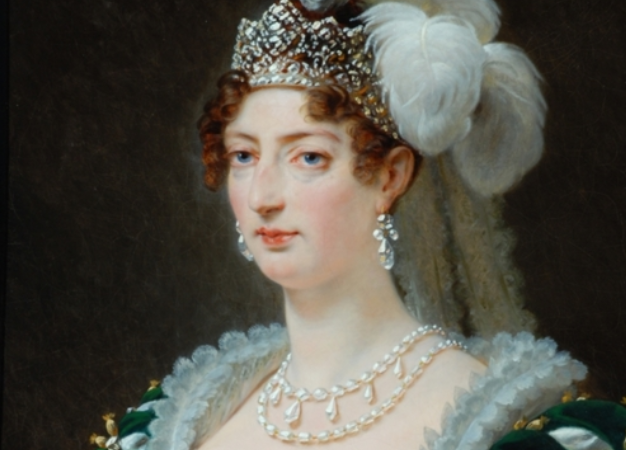
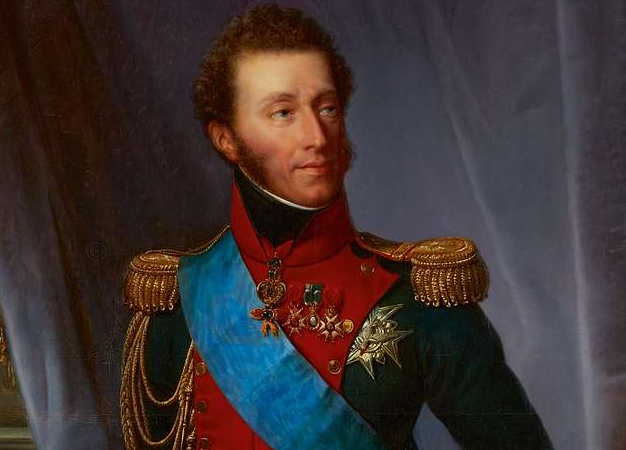
Marie Thérèse of France and Louis Antoine of France (Exile): Residents during the French Revolution.
Anton Bruckner (1895–1896): He lived his final months in the caretaker’s quarters.
Archduke Franz Ferdinand of Austria (1896–1914): The last permanent royal resident.
The early years and imperial use
After the acquisition by Maria Theresa, the palace was not used as a permanent residence for the imperial family. The Habsburgs preferred Schönbrunn Palace or the Hofburg. The Belvedere was mainly intended for the exhibition of the imperial art collection and the celebration of specific social events.
However, the outbreak of the French Revolution changed this situation. The palace served as a refuge for members of the French royalty in exile. Marie Thérèse of France, daughter of Louis XVI and Marie Antoinette, lived in the Belvedere along with her husband Louis Antoine of France, Duke of Angoulême. Louis Antoine was the last heir to the throne of France and his stay in Vienna represented the Habsburgs’ support for the displaced French nobility.
Illustrious residents and the end of the monarchy
At the end of the 19th century, Emperor Franz Joseph I granted the use of an apartment in the Kustodenstöckl to the composer Anton Bruckner. The Kustodenstöckl is the caretaker’s building adjacent to the Upper Belvedere. Bruckner, already elderly and with health problems, received this benefit as recognition for his musical career. The composer died in these quarters on October 11, 1896.
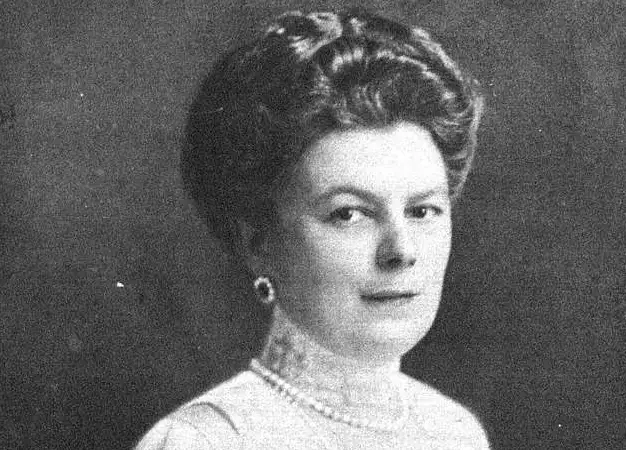
The most influential resident of the modern era was Archduke Franz Ferdinand of Austria. The heir to the throne turned the Upper Belvedere into his official residence and political command center. Under his direction, the palace was modernized with the installation of electricity and heating systems. The archduke lived there with his wife Sophie Chotek and their children until 1914. His assassination in Sarajevo, which triggered World War I, abruptly ended the palace’s residential function. After the conflict, the new republican government transformed the entire complex into a national museum.
Modern history of the Belvedere Palace
The modern history of the Belvedere is linked to the consolidation of the Österreichische Galerie Belvedere. In 1903, the Lower Belvedere opened its doors as the “Moderne Galerie,” becoming the first state institution dedicated exclusively to the contemporary art of the time. After the end of World War I in 1918, the Upper Belvedere was fully integrated into the museum, allowing for a chronological exhibition spanning from the Middle Ages to the present.
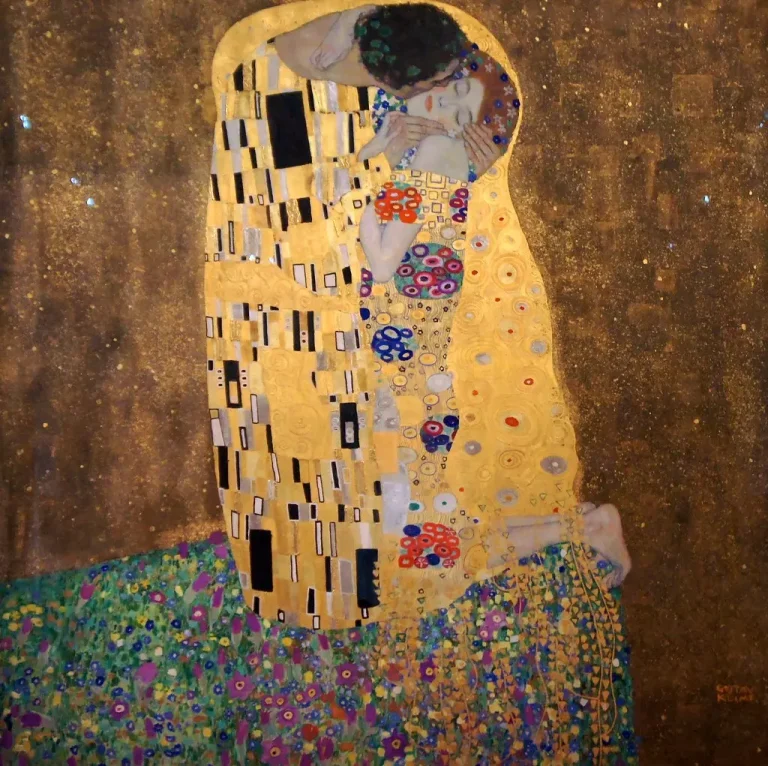
The museum is world-famous for housing the largest collection of works by Gustav Klimt, including his most iconic painting, “The Kiss.” The collection also stands out for the Expressionist works of Egon Schiele and Oskar Kokoschka. The palace is not only a container for art, but also a fundamental political stage.
In 1955, the Marble Hall was the chosen site for the signing of the Austrian State Treaty, which returned sovereignty to Austria after the Allied occupation following World War II.
Looted art and restitution
A critical chapter in the management of the Österreichische Galerie Belvedere is the history of art looted by the Nazis. During the war, numerous works were confiscated from Jewish collectors and ended up in the halls of the Belvedere. The most emblematic case was Klimt’s “Portrait of Adele Bloch-Bauer I,” which was the subject of an international legal battle led by Maria Altmann. After an arbitration in 2006, the work was returned to its legitimate heirs.
Another highly relevant case was Egon Schiele’s “Portrait of Wally.” This work originally belonged to the gallery owner Lea Bondi Jaray, from whom the Nazi collector Friedrich Welz stole it. Subsequently, the work became part of the Rudolf Leopold collection and was the subject of prolonged litigation in United States courts.
These restitution processes have forced the Österreichische Galerie Belvedere to conduct exhaustive research into the provenance of its holdings to guarantee ethical transparency in its exhibitions.
What is the Belvedere Palace used for today?
Currently, the Belvedere Palace functions as a top-tier museum complex under the official name Österreichische Galerie Belvedere. Its primary use is the conservation, research, and exhibition of Austrian artistic heritage within an international context. The complex divides into three sites with specific functions:
Upper Belvedere
Houses the permanent collection. Here, the museum displays masterpieces by Gustav Klimt and fundamental pieces of art from the 15th to the 20th century. Its function is eminently educational and touristic.
Lower Belvedere
Used for major temporary exhibitions of high technical quality. The former private apartments of Prince Eugene and the Orangerie serve as versatile spaces for dialogue between historical art and modern curatorial proposals.
Belvedere 21
Located a few meters from the main park, this is the space dedicated to contemporary art, film, and recent Austrian architecture.
In addition to its museum function, the Belvedere is a public recreation space. Most of the Baroque gardens offer free access and represent an essential green lung for the city of Vienna. The palace is also a center for academic research, featuring one of the most complete art libraries in Europe, dedicated to the study of avant-garde movements and Central European art history.